# Suman Khadka
---
> Senior Software Engineer & AI Systems Builder. Based in Kathmandu, Nepal. Every page and post of https://sumankhadka.net, in one file.
---
# About
> Suman Khadka is a senior software engineer from Kathmandu, Nepal, building AI-powered systems and scalable software, and writing about engineering and books.
Suman Khadka · Updated 2026-11-26 · Source: https://sumankhadka.net/about/
Engineer, writer, and systems thinker. I build software that scales and write about the craft.
Hello! I'm Suman Khadka, a passionate software engineer from the beautiful land of Nepal. My journey in the tech world began with a 4-year program in Computer Engineering at Pokhara University, where I honed my skills in software development and engineering.
Today I build AI-powered systems, distributed backends, and developer tools: LLMs, RAG, agents, and everything in between. Over 7+ years I've built 12 AI systems and written about engineering, systems, book notes and productivity.
## Engineering philosophy
**Simplicity over cleverness.** The best code is the code you can reason about at 2 AM. I optimize for clarity first, performance second.
**Systems, not features.** Every feature is a liability. I think in systems: how components interact, fail, and evolve over time.
**Write to think.** Writing is my debugging tool for ideas. If I can't explain it simply, I don't understand it well enough.
**Curiosity as compass.** I follow questions, not trends. The best work comes from genuine curiosity about how things work.
## Expertise and tools
- **AI & ML:** Multi-agent systems, LLM orchestration, RAG pipelines, vector search, LangChain, OpenAI, Gemini, Pinecone, Qdrant, prompt engineering
- **Development:** FastAPI, Django, Next.js, React, TypeScript, Python, GraphQL, REST APIs, Laravel, Vue.js, Go, WordPress
- **Cloud & DevOps:** PostgreSQL, Redis, Kubernetes, Docker, Terraform, CI/CD, GitHub Actions, AWS, Google Cloud, EC2, S3
- **Workflow:** Notion, Jira, Trello, Slack, GitHub Projects, Postman, Figma, Linear
## What I share
**Videos.** On my [YouTube channel](https://www.youtube.com/@sumankhdka) you'll find videos on technology, productivity, and lifestyle: insights and actionable tips that educate and inspire.
**A weekly newsletter.** Every Sunday, I share my thoughts through a weekly email newsletter. From deep contemplations on various subjects to book, article, and podcast recommendations that have been a game-changer for me.
**In-depth articles.** This website is my digital space for in-depth articles on [engineering](https://sumankhadka.net/topic/engineering/), [tools and workflows](https://sumankhadka.net/topic/tools-workflows/), [books](https://sumankhadka.net/books/), productivity and life advice. I believe in the power of knowledge to shape our future.
## Let's connect
- **X (Twitter):** Feel free to tweet me [@sumankhdka](https://x.com/sumankhdka). I'm here to engage and respond promptly to your questions or messages.
- **Email:** For longer discussions or if you prefer a more personal touch, reach out to me at [mail@sumankhadka.net](mailto:mail@sumankhadka.net). I strive to reply to as many emails as I can.
- **In person:** If you're interested in a face-to-face meeting, I'm all ears. Let's connect over coffee and share ideas.
---
# Let's connect
> Contact Suman Khadka for collaborations on AI systems, software development and IT consulting. Email, location, availability and social profiles.
Suman Khadka · Updated 2026-11-26 · Source: https://sumankhadka.net/contact/
Have a project in mind, a question about AI systems, or just want to chat engineering? I'd love to hear from you.
I'm open to collaborations on AI systems, software development, and IT consulting.
## Contact
- **Email:** [mail@sumankhadka.net](mailto:mail@sumankhadka.net)
- **Location:** Kathmandu, Nepal
- **Availability:** Open for projects
## Elsewhere
- [GitHub](https://github.com/sumankhdka)
- [Twitter / X](https://x.com/sumankhdka)
- [LinkedIn](https://www.linkedin.com/in/sumankhdka)
- [Instagram](https://www.instagram.com/sumankhdka)
- [YouTube](https://www.youtube.com/@sumankhdka)
- [Facebook](https://www.facebook.com/sumankhdka)
---
# Privacy Policy
> How sumankhadka.net handles your data. The site sets no cookies, runs no analytics or ads, and does not collect personal information.
Suman Khadka · Updated 2026-11-26 · Source: https://sumankhadka.net/privacy/
This page explains what happens to your data when you visit sumankhadka.net.
## What this site collects
Nothing, directly. This is a static website. It has no accounts, no comment forms, no newsletter form, no analytics, no advertising and no tracking scripts, and it sets no cookies.
The light or dark theme you choose is saved in your own browser (local storage) so the site remembers it. It never leaves your device.
## Hosting
The site is hosted on [Cloudflare](https://www.cloudflare.com). Like any web host, Cloudflare processes technical data such as your IP address and browser type to deliver pages and protect the site from abuse. See [Cloudflare's privacy policy](https://www.cloudflare.com/privacypolicy/).
## Email
If you email me, I use your address and message only to reply. I don't share them or add you to any list.
## Links to other sites
Posts link to other websites, which have their own privacy policies.
## Questions
Email [mail@sumankhadka.net](mailto:mail@sumankhadka.net).
---
# The Tech I Use
> The laptop, monitor, keyboard, phone and other gear Suman Khadka uses every day for software engineering, writing and creating.
Suman Khadka · Updated 2026-11-26 · Source: https://sumankhadka.net/tech/
As a tech and productivity nerd, I'm always on the hunt for the perfect tools of the trade. This page is an always up-to-date list of my favourites.
## Hardware
- **Laptop:** M1 MacBook Pro, 16 GB RAM, 512 GB SSD. A powerful laptop with the M1 chip for fast performance and a 16.2-inch Liquid Retina XDR display.
- **Monitor:** Dell 24 Monitor (P2422H). A Full HD monitor with a good balance between performance and productivity.
- **Keyboard:** Sunsonny RGB mechanical keyboard. Mechanical switches and RGB backlighting for a customizable typing experience.
- **Mouse:** Rapoo MT550. A wireless mouse with a high-precision optical sensor for smooth navigation.
- **Phone:** iPhone 14 Pro Max, 256 GB.
- **Microphone:** HyperX. A microphone known for its sound quality and versatility.
## Software
The tools I work with every day are listed on the [About](https://sumankhadka.net/about/) page, and I write about the ones worth sharing in [Tools & Workflows](https://sumankhadka.net/topic/tools-workflows/).
---
# Terms and Conditions
> The terms for using sumankhadka.net, including copyright on articles and book notes, quoting and linking, and links to other websites.
Suman Khadka · Updated 2026-11-26 · Source: https://sumankhadka.net/terms/
By using sumankhadka.net, you agree to these terms.
## Content
The articles, book notes and other writing on this site are by Suman Khadka unless stated otherwise. You're welcome to quote short passages with a link back to the original page. Please ask before republishing a full post.
Book notes and reviews quote the books they discuss for commentary. Those quotes belong to their authors and publishers.
## No professional advice
Posts share personal experience and opinion. They are not professional, financial, medical or legal advice. Use them at your own judgment.
## Links to other sites
This site links to other websites. I don't control them and am not responsible for their content.
## Changes
These terms may change. The date at the top of this page shows when they were last updated.
## Contact
Email [mail@sumankhadka.net](mailto:mail@sumankhadka.net).
---
# The Light Between Oceans: A Journey from Screen to Page
> Reading M.L. Stedman's The Light Between Oceans after watching the film: what the book adds, the questions it leaves, and whether you should read it.
By Suman Khadka · Published 2025-10-30 · Topics: Books · Source: https://sumankhadka.net/the-light-between-oceans-a-journey-from-screen-to-page/
Three years ago, I watched a movie named _The Light Between Oceans_. It had Michael Fassbender and Alicia Vikander in it, and honestly, it made me emotional. After finishing it, I remember thinking—if the movie was this good, imagine how amazing the book must be!
I’ve always believed that books based on movies or series (or actually, movies based on books) have so much more to offer. There’s something about reading the author’s actual words that a movie just can’t show you, no matter how beautiful it looks.
So recently, I finally picked up M.L. Stedman’s book, and let me tell you—it was worth it.
## What’s It About?
The story is set in 1920s Australia. Tom Sherbourne is a lighthouse keeper who comes back from World War I and starts working at this super isolated island called Janus Rock. It’s so far from everything that supply boats only come once a season. He lives there with his wife Isabel, and they’re basically the only people on the island.
Life is peaceful until Isabel goes through something really painful—she has two miscarriages and one stillbirth. Then one day, a boat washes up on their shore. Inside, there’s a dead man and a crying baby who’s somehow still alive.
Tom wants to report it right away. But Isabel, who’s been hurting so much from losing her babies, sees this as a miracle. And this is where their whole life changes.
## The Beginning Was Slow (But Stay With It!)
I’m not going to lie — I almost quit the book at the start. The beginning spends a lot of time on Tom’s life during the war and before he became a lighthouse keeper. I’d seen the movie, knew the story, and just wanted the main part. I nearly skipped a bunch of pages.
But I kept going.
Halfway in, it hooked me. I couldn’t stop. Stayed up late, flew through it, and by the end I was more emotional than the movie ever made me. The book hit way harder.
## The Questions That Stick With You
What I love most about this book is how it makes you think. Tom knows they should report the baby. He’s a good guy with strong morals. But Isabel is broken and desperate, and she truly believes this baby was sent to them for a reason.
They name her Lucy. They raise her as their own. And their decision ends up affecting people they don’t even know about.
Reading this made me wonder—what would I do in their situation? It’s easy to say “I’d do the right thing” when you’re not the one going through it. But when you’re in pain, when you want something so badly, when you think you’re actually helping… it’s not that simple.
## Happiness Mixed With Guilt
The book has happy moments, but they’re always mixed with this heavy feeling. Every time Lucy smiles or does something cute, you feel joy for Tom and Isabel. But at the same time, you know their happiness is built on a lie. You know someone else is suffering because of their choice.
M.L. Stedman writes this so well that you feel everything—the love, the guilt, the fear, all of it.
## That Ending Though…
The last part of the book really hit me on a deep level. I closed the final pages just sitting there, completely absorbed in everything I’d just read. The ending doesn’t offer easy answers—it reminds you that life is messy, that love can be both beautiful and painful, and that even good people can make heartbreaking choices.
Even days after finishing it, I kept thinking about the characters. They felt so real to me in a way the movie, as good as it was, couldn’t quite capture.
## Should You Read It?
Yes! But here’s my advice:
- **Be patient with the beginning.** It picks up, I promise.
- **Keep tissues ready.** You’ll probably need them.
- **Think about the questions it raises.** This would be perfect for discussing with friends or in a book club.
- **If you haven’t seen the movie yet, watch it!**
The book asks: Can good people do bad things while thinking they’re right? Where’s the line between love and selfishness? How do you make choices when every option hurts someone?
I don’t think we can really answer these questions unless we face something similar ourselves.
## Final Thoughts
_The Light Between Oceans_ is M.L. Stedman’s first novel, and it’s really impressive. Sure, it could have been shorter in some parts. Yes, the start is slow. But the emotional experience you get from reading it is incredible.
Three years after watching the movie, reading this book felt like understanding a story that had been sitting in my heart all along. Whether you’ve seen the film or not, this book deserves your time.
Just make sure you’re ready to feel a lot of emotions.
I’ll definitely rewatch the movie after this.
_Have you read The Light Between Oceans? What did you think about Tom and Isabel’s choice? Let me know in the comments!_
---
# Your Unfair Advantage: Why Everyone Has Something Special
> What The Unfair Advantage by Ash Ali and Hasan Kubba taught me: everyone has unique advantages, comparison is a trap, and the MILES framework helps.
By Suman Khadka · Published 2025-10-25 · Topics: Books · Source: https://sumankhadka.net/your-unfair-advantage-why-everyone-has-something-special/
## Life Isn’t Fair, and That’s Okay
I recently finished reading _The Unfair Advantage: How You Already Have What It Takes to Succeed_ by Ash Ali and Hasan Kubba, and honestly, it changed how I see things. The book’s main idea is simple but powerful: life isn’t a level playing field, and everyone has their own unique advantages.
This got me thinking about my own life and what makes me, well, me.
## What’s an Unfair Advantage Anyway?
It’s basically anything that gives you an edge. Maybe your family has money to invest. Maybe you live in a great location with lots of opportunities. Maybe you have connections that help you get your foot in the door. Or maybe it’s just a skill you’re naturally good at.
These advantages are different for everyone, and that’s the whole point.
## The Things I’m Not Good At
Let me be honest: I’m terrible at starting conversations. I see my friends walk up to random people and just start chatting like it’s the easiest thing in the world. Meanwhile, I’m standing there thinking, “What do I even say?”
It’s frustrating. Sometimes I feel jealous watching them network so effortlessly. From where I’m standing, their social skills feel like a massive unfair advantage.
## What I’m Actually Good At
But here’s the flip side: I’m pretty decent at programming and coding. When I’m working on a project or solving a problem through code, things just click for me. It feels natural.
While others might struggle with understanding certain programming concepts or debugging issues, I find myself enjoying the process. I can sit for hours coding without getting bored. That’s my comfort zone.
Is this fair to others? Probably not. But it’s my thing, and I’ve learned to appreciate it.
## Why This Matters
The point isn’t to brag about what you’re good at or feel bad about what you’re not. It’s about recognizing that we all have different strengths.
I might never be the person who charms everyone at a party. And you know what? That’s fine. I can create things through code. I can solve problems. I can build stuff that helps people.
That’s my way of contributing, and it’s just as valid as being a great conversationalist.
## Everyone Has Their Own Advantages
Think about it: we all have something we’re naturally better at than others. Maybe you:
- Pick up new languages quickly
- Have a great eye for design
- Are amazing at understanding what people need
- Can explain complicated things simply
- Stay calm in stressful situations
These are all unfair advantages. The trick is recognizing yours.
## Stop Comparing Yourself to Others
When you’re always looking at what others can do that you can’t, you miss what makes you special. I spent too much time wishing I was more outgoing before I realized I should focus on what I’m actually good at.
Your journey is yours. Their journey is theirs. Comparing the two doesn’t help anyone.
## The MILES Framework
One of the coolest things in the book is the MILES framework. It helps you identify your unfair advantages across five areas:
**M – Money**: Do you have financial resources or access to funding?
**I – Intelligence \& Insight**: Are you naturally smart or do you have special knowledge about something?
**L – Location \& Luck**: Where you live and the lucky breaks you’ve had.
**E – Education \& Expertise**: Skills you’ve learned and things you’re trained in.
**S – Status**: Your reputation, network, and who you know.
Looking at these five areas helps you see what advantages you actually have. For me, the “I” part connects to my coding abilities, and I’m working on the “E” part by getting better at it.
## Not Just for Business
The book talks a lot about startups and business, which makes sense since the authors are entrepreneurs. But honestly, these ideas apply to everything:
- Your career path
- Personal projects
- Learning new skills
- Building relationships
- Finding what makes you happy
Understanding your strengths helps you make better choices in all these areas.
## What You Should Do
Next time you feel jealous of someone else’s abilities, stop and ask yourself: What am I good at that they might not be?
Everyone has something. Your job is to figure out what yours is and use it.
For me, it’s coding. I’m not going to force myself to become a networking expert overnight. Instead, I’ll keep getting better at what I enjoy and what comes naturally to me.
## My Take on It
I genuinely enjoyed this book. If you’re someone who feels like you’re behind or don’t have what it takes, give it a read. It talks about the MILES framework, different mindsets, and how to spot your own advantages.
The main message stuck with me: stop trying to be someone else and start being the best version of yourself.
---
_Have you thought about your own unfair advantages? What comes naturally to you that others find difficult? That’s where you should focus your energy._
---
# Building APIs People Actually Want to Use
> What my first failed API taught me about building APIs people want to use: URL structure, HTTP methods, status codes, versioning, docs and security.
By Suman Khadka · Published 2025-10-17 · Topics: Engineering · Source: https://sumankhadka.net/building-apis-people-actually-want-to-use/
Looking back, I can pinpoint the exact moment I realized my first API was a failure.
It was a simple endpoint for creating users. I sent in a name and email, it hit the database, and returned **200 OK**. From a technical standpoint, it worked fine. But within days, my teammates started asking questions I couldn’t answer cleanly.
“Why does the response format keep changing?”
“Which status code means the user already exists?”
“How do we know we’re not breaking client code next week?”
That’s when it hit me: _**I’d built something that worked, but nobody actually wanted to use it.**_
## The Shift in Thinking
Most developers—including me, back then—think of APIs as purely technical artifacts. You write the code, hook it up to a database, and you’re done. But I eventually realized that’s only half the story.
**An API is a product.** It’s an interface between teams. It’s a promise to your users—whether they’re frontend developers, mobile teams, or external partners—that things will stay predictable. When your API is confusing or inconsistent, you’re not saving time. _You’re creating friction._
That realization changed everything. Here’s what I learned along the way.
## URL Structure Matters
My early endpoints read like Java methods. They worked, but they felt clunky. Then I discovered REST principles, and suddenly things made sense.
Instead of action\-oriented verbs, I shifted to _**resource\-oriented thinking**_. The pattern became clear: _once someone sees the URL structure, they understand what’s happening without explanation._ The design does the talking.
Resources speak louder than actions. When you organize your endpoints around things instead of operations, everything becomes more intuitive. A new developer doesn’t need a long explanation—they just look at the path and understand what’s available.
## HTTP Methods Are Your Contract
I used to treat HTTP methods casually—mostly just using POST for everything because it felt safe. Then I learned the mapping, and everything clicked into place.
**GET** for reading data. **POST** for creating something. **PUT** for replacing existing data. **PATCH** for making partial updates. **DELETE** for removing something.
Once I started respecting this contract, everything improved. Caching worked correctly. Tools like Postman became genuinely useful. And developers stopped writing weird workarounds. _It’s not about being pedantic—it’s about giving the web a common language._
## Status Codes Tell a Story
For too long, I returned 200 for everything—errors included. I figured if the server didn’t crash, mission accomplished.
But then I had to watch frontend developers parse error messages just to figure out what went wrong. That’s when I realized **status codes aren’t just metadata. They’re part of your API’s language.**
Now I use them strategically. **200 OK** when everything went well. **201 Created** when something new was added. **400 Bad Request** when the request itself was malformed. **401 Unauthorized** when authentication failed. **403 Forbidden** when permission was denied. **404 Not Found** when a resource doesn’t exist. **500 Server Error** when it’s our mistake.
_Now developers can handle errors without guessing. The code tells them exactly what happened._
## Versioning from the Start
I once made what seemed like an innocent change—renaming a single response field. Turns out that field was being used across multiple frontend pages. **Everything broke.**
That taught me a hard lesson: even small changes can ripple across systems. Now I version every API from day one. Even if version two is 95% identical to version one, _the version number acts as a buffer._ It gives teams time to migrate. It protects both sides from unexpected breaking changes.
Versioning isn’t about being pessimistic. It’s about respecting the fact that other people depend on your work.
## Boring Consistency Beats Clever Variations
I used to mix naming conventions depending on whatever seemed right at the moment. One response had userId, another had id, a third had user\_id. My teammates hated it.
Now I pick a style and commit to it. Field names stay consistent. Response structures follow the same pattern. Date formats never vary. Pagination always works the same way. Error responses look identical.
**It might sound tedious, but consistency is a feature.** It reduces cognitive load. It makes APIs intuitive. When everything follows predictable rules, users can focus on their work instead of decoding your quirks.
## Documentation That Stays Current
Before I discovered API documentation tools, we kept everything in shared documents that were constantly out of sync. People kept asking questions that were already answered but nobody could find the answers.
With proper documentation standards, everything changed. The docs became a living part of the codebase. They stayed current because they lived alongside the actual endpoints. Teams could explore without asking. QA could test without bottlenecks. _No more guessing. No more endless back\-and\-forth._
Documentation isn’t extra work. It’s part of building an API that others can actually use.
## Security Isn’t Optional
I once built a “temporary” internal API with no authentication because it seemed low\-stakes. That API ended up on the staging environment, and someone called it with production data.
That was a bad day.
Lesson learned: there’s no such thing as “just for now” when it comes to security. Now I add authentication everywhere—even locally, even for tests. And I never expose any endpoint without HTTPS. _**Security isn’t a nice\-to\-have. It’s foundational.**_
## The Real Lesson
If I could go back to that first API I built, the advice I’d give myself wouldn’t be technical. It would be this:
> Your job isn’t to return data. It’s to make other people’s work easier.
An API is how teams communicate. It’s how products scale. And when you design with care—with clear conventions, consistent patterns, and genuine thought for the people using it—you eliminate hours of confusion and frustration downstream.
Next time you build an API, don’t just ask yourself: “Does this work?”
Ask: _**“Would I enjoy building with this?”**_
If the answer is yes, _you’ve built something real._
---
# I Spent 3 Hours Debugging My Own Code—Here’s How Better Documentation Could’ve Saved Me
> I spent three hours decoding code I wrote a year ago. Why we forget our own code, and the small documentation habits that would have saved me.
By Suman Khadka · Published 2025-06-25 · Topics: Tools & Workflows · Source: https://sumankhadka.net/i-spent-3-hours-debugging-my-own-code-heres-how-better-documentation-couldve-saved-me/
Last week, I spent three hours trying to understand a piece of code I wrote one year ago. Three hours. For my own code.
I was absolutely certain I remembered how it worked. The logic seemed familiar, the variable names rang a bell, and I had that confident feeling of “oh yeah, this one.” But when I actually sat down to modify it, nothing made sense. The architecture decisions felt random, the edge cases were mysteries, and the business logic might as well have been written in ancient Greek.
This is what psychologists call the [Mandela Effect](https://www.goethe.de/ins/gb/en/kul/mag/21931772.html) in action—when we’re collectively convinced we remember something that never happened, or happened differently than we think. You know, like being sure the Monopoly Man wears a monocle (he doesn’t) or that the Berenstain Bears were spelled “Berenstein” (they weren’t).
As engineers, we experience our own version of this constantly. We’re convinced we’ll remember why we chose that particular data structure, or how that complex algorithm works, or what that cryptic variable name actually represents. Spoiler alert: we won’t.
### Why Your Brain Is Working Against You
Here’s the uncomfortable truth: our brains are designed to forget. They have to be. We process massive amounts of information every day—new frameworks, changing requirements, evolving codebases, countless meetings, and endless Slack threads. If we held onto every detail, we’d be paralyzed by information overload.
So our brains do what they do best: they fill in gaps with assumptions, compress complex information into simplified patterns, and quietly discard what seems unimportant in the moment. This works great for survival, but it’s terrible for engineering.
The result? That brilliant solution you crafted becomes a puzzle you can’t solve. The elegant architecture you designed becomes a maze you can’t navigate. The clever optimization you implemented becomes a bug you can’t trace.
### Documentation: Your Time Machine
Good documentation isn’t just about helping others—it’s about helping your future self. It’s a time machine that lets you communicate with the person you’ll be in six months, when the context has faded and the details have blurred.
Think of it as leaving breadcrumbs for yourself, except these breadcrumbs don’t get eaten by birds or washed away by rain. They’re permanent markers that say “here’s what I was thinking, here’s why I made this choice, and here’s what you need to know to pick up where I left off.”
I’ve learned this lesson the hard way more times than I’d like to admit. Every time I skip documentation because “I’ll remember this,” I’m essentially setting a trap for my future self. And my future self always falls for it.
### The Onboarding Test
Here’s a simple test I use: could someone completely new to the project understand this system from the documentation alone? Not just the what, but the why. Not just the happy path, but the edge cases. Not just the current state, but the evolution that led here.
If the answer is no, then I’m not just making life difficult for potential new team members—I’m making life difficult for myself when I inevitably forget the context.
Good documentation serves as a mental prosthetic. It extends our limited working memory and compensates for our tendency to forget. It turns tribal knowledge into institutional knowledge, and makes complex systems navigable even when their creators have moved on.
### What Actually Matters
The best documentation I’ve encountered isn’t comprehensive—it’s strategic. It focuses on the decisions that aren’t obvious from reading the code. It explains the constraints that shaped the solution. It captures the alternatives that were considered and rejected.
Here’s what I try to document:
**The Why Behind the What**: Code shows what you did, but rarely why you did it. Document the business requirements, technical constraints, and tradeoffs that influenced your decisions.
**The Path Not Taken**: What other approaches did you consider? Why did you reject them? This saves future developers (including yourself) from re\-exploring dead ends.
**The Gotchas**: What surprised you during implementation? What assumptions turned out to be wrong? What edge cases emerged that weren’t obvious upfront?
**The Dependencies**: What external factors does this code rely on? What happens if those factors change? What’s the blast radius of modifications?
### Making It Sustainable
The biggest barrier to good documentation isn’t time—it’s habit. Writing documentation feels like overhead when you’re in the flow of coding. The solution isn’t to document everything; it’s to document the right things at the right time.
I’ve found that the best time to document is right after you’ve solved a problem, when the context is fresh but the struggle is still memorable. That moment when you finally understand the solution is the perfect time to explain it to your future self.
AI tools are also changing the game here. They can generate basic documentation from code structure and comments, maintain consistency across projects, and even help identify gaps in existing docs. But they can’t replace the human insight of why you made certain decisions—that’s still on us.
### The Compound Effect
Documentation has a compound effect. Each piece you write makes the next piece easier. Each system you document thoroughly becomes a reference for similar systems. Each decision you capture becomes a precedent for future decisions.
Over time, you build up a knowledge base that makes you faster, not slower. Instead of re\-solving the same problems repeatedly, you’re building on previous solutions. Instead of second\-guessing past decisions, you’re learning from documented reasoning.
### Start Small, Stay Consistent
You don’t need to document everything perfectly from day one. Start with the decisions that surprised you or the problems that took longer than expected to solve. Document the moments when you thought “I should remember this” or “this might not be obvious to others.”
Make it part of your workflow, not an afterthought. When you’re writing a complex function, spend five minutes explaining why it exists. When you’re making an architecture decision, capture the alternatives you considered. When you’re fixing a tricky bug, document what made it tricky.
Your future self is counting on you. Don’t let them down.
_The best time to plant a tree was 20 years ago. The second best time is now. The same goes for documentation—start today, and your future self will thank you for it._
---
# My Battle Scars from Building a System That Serves Millions
> Hard lessons from scaling a system to millions of users: what failed, and what worked with Redis, microservices, Kafka, PostgreSQL and monitoring.
By Suman Khadka · Published 2025-06-10 · Topics: Engineering · Source: https://sumankhadka.net/my-battle-scars-building-system-serves-millions-users/
_What nobody tells you about the messy reality of scaling_
## The Day Everything Changed
I still remember the exact moment our system first buckled. It was 2 AM, my phone was buzzing with alerts, and our users were flooding support with “the app won’t load” messages. We had just crossed 10,000 active users, and I was staring at server metrics that looked like a heart attack in progress.
That night taught me something no computer science textbook ever mentioned: **scaling hurts before it helps**.
## My Naive Beginning: The Beauty of Not Knowing Better
Looking back, I’m almost nostalgic for our original setup. We had built something beautifully stupid:
- A single Django app that did everything
- One PostgreSQL database (because we thought we were too cool for MySQL)
- A $30/month DigitalOcean droplet
- Pure optimism as our load balancer
For the first 500 users, this thing purred like a content cat. I could deploy by literally typing `git push heroku main`. Debugging meant adding a few print statements. When something broke, I knew exactly where to look because there was only one place it _could_ break.
Those were the golden days when I actually slept through the night.
## The Great Server Shopping Spree (Spoiler: It Didn’t Work)
When performance started degrading, I did what every desperate developer does: I threw money at it.
“Let’s get bigger servers!” I declared, upgrading from our humble droplet to a beefy 8\-core machine with 32GB RAM. When that wasn’t enough, I spun up three more identical servers behind a load balancer.
The irony hit me later: I had just built a very expensive way to overwhelm the same single database. All those shiny new servers were still fighting over one tiny PostgreSQL instance like customers at a Black Friday sale.
**My first hard lesson**: Horizontal scaling is only as strong as your weakest link.
## The Redis Epiphany That Saved My Sanity
The breakthrough came during a particularly brutal weekend. My team mate suggested we try Redis, and honestly, I was skeptical. “Another technology to learn? Another thing that can break?”
But desperation makes you open\-minded.
I started small—caching user profiles and the most frequently accessed posts. The implementation was embarrassingly simple:
```
python
# Check cache first, database second
def get_user_profile(user_id):
cached = redis.get(f"profile:{user_id}")
if cached:
return json.loads(cached)
profile = database.fetch_profile(user_id)
redis.setex(f"profile:{user_id}", 3600, json.dumps(profile))
return profile
```
The results were _immediate_. Page load times dropped from 3\-4 seconds to under 500ms. Database CPU usage fell off a cliff. I felt like I had discovered fire.
**My second lesson**: Sometimes the simplest solutions have the biggest impact.
## The Microservices Mistake I Had to Make
Success made me cocky. “If caching works this well,” I thought, “imagine what proper architecture could do!”
I spent three months breaking our monolith into microservices:
- **Auth Service** for user management
- **Content Service** for posts and media
- **Social Service** for likes, follows, and feeds
On paper, it looked professional. In practice, it was a coordination nightmare.
A simple “load user timeline” request now involved:
1. Auth service validates the token
2. Social service finds who they follow
3. Content service fetches recent posts
4. Social service adds engagement data
5. Everything gets stitched together
What used to be one database query became a spider web of network calls. Latency went up. Complexity exploded. I spent more time debugging service\-to\-service communication than actual features.
**My third lesson**: Microservices solve organizational problems, not performance problems. Don’t use them just because Netflix does.
## When Kafka Taught Me the Art of Letting Go
The real breakthrough came when I stopped trying to make everything synchronous. I discovered that most of what felt “urgent” really wasn’t.
When a user posts something, do we really need to immediately:
- Update their follower count?
- Send push notifications?
- Update recommendation algorithms?
- Log analytics events?
The answer was no. We needed to _acknowledge_ the post immediately, but everything else could happen eventually.
Enter Kafka. Now when someone posts, we:
1. Save the post to the database
2. Return success to the user
3. Drop a “PostCreated” event into Kafka
4. Let other services process it in their own time
Suddenly, posting felt instant. Users were happy. Servers were happy. I was happy.
**My fourth lesson**: The user only cares about their immediate action. Everything else can wait.
## The Database Wars: When PostgreSQL Waved the White Flag
At around 100,000 users, our database started sending distress signals. Query times that used to be 50ms were hitting 2\-3 seconds. The CPU was pegged at 100%. Connection pools were exhausted.
I had three choices:
1. **Scale up**: Bigger, more expensive database servers
2. **Scale out**: Multiple databases with careful planning
3. **Optimize**: Better queries, better indexing, better schema
I tried all three, in that order.
Scaling up bought us time but not a solution. Eventually, I implemented read replicas—one master for writes, three replicas for reads. Then I started sharding users by geographic region.
The hardest part wasn’t the technical implementation—it was accepting that my beautiful, simple database architecture was gone forever.
**My fifth lesson**: Scaling is a series of beautiful architectures you have to abandon.
## Building My Crystal Ball: The Monitoring Revolution
For the first year, debugging felt like being a detective with no evidence. Something would break, users would complain, and I’d frantically dig through logs trying to piece together what happened and when.
Then I built what I call my “system crystal ball”:
- **Grafana dashboards** showing every metric that mattered
- **ELK stack** for searchable, filterable logs
- **Custom alerts** that woke me up before users noticed problems
- **Distributed tracing** to follow requests through our service maze
The transformation was incredible. Instead of “something is slow,” I could see exactly which service, which endpoint, which database query was the problem.
More importantly, I started seeing patterns. Traffic spikes at lunch time. Memory leaks that took exactly 6 hours to manifest. Database queries that got slower as our user table grew.
**My sixth lesson**: You can’t fix what you can’t see, and you can’t predict what you don’t measure.
## The CDN Revelation: Why I Was Sending Images to Mars
I discovered we were doing something embarrassingly stupid. A user in Tokyo would request our CSS file, and we’d send it from our server in Virginia. Every time. For every user. Even though the file never changed.
Implementing Cloudflare CDN was like upgrading from a bicycle to a rocket ship. Static assets—images, CSS, JavaScript—now served from edge locations worldwide.
The impact was immediate:
- Page load times improved globally
- Server bandwidth usage dropped 60%
- Users stopped complaining about slow image loading
**My seventh lesson**: The internet is fast, but physics is still physics. Put your content close to your users.
## What I Wish Someone Had Told Me on Day One
If I could send a message back to my naive, optimistic past self, here’s what I’d say:
### Start With These From Day One
1. **Redis caching** – Not when you need it, but before you think you do
2. **Proper monitoring** – Grafana and good logging from commit \#1
3. **Database indexing strategy** – Plan for queries you don’t have yet
4. **Async job processing** – Not everything needs to happen right now
5. **CDN for static assets** – It’s cheap insurance against geography
### Avoid These Tempting Mistakes
1. **Don’t scale by adding identical servers** – Find your actual bottleneck first
2. **Don’t rush to microservices** – Monoliths can scale further than you think
3. **Don’t optimize prematurely** – But do measure everything
4. **Don’t assume cloud auto\-scaling solves everything** – It just makes problems more expensive
---
## The Uncomfortable Truth About Scaling
Here’s what nobody tells you: **Every scaling solution creates new problems**.
Redis solved our database bottleneck but gave us cache invalidation headaches. Microservices improved our team’s autonomy but complicated our deployment pipeline. Load balancers improved our reliability but made debugging distributed issues harder.
Scaling isn’t about finding the perfect architecture—it’s about trading problems you can’t handle for problems you can.
## My Current Philosophy: Embrace the Inevitable Break
These days, I don’t try to build systems that never break. I build systems that break gracefully and recover quickly.
Every bottleneck is a lesson. Every outage is a teacher. Every user complaint is data about what really matters.
When you’re serving hundreds of thousands of users and something goes wrong at 3 AM, remember: this is the luxury problem of success.
That spinning loader isn’t just a frustrated user—it’s proof that you built something people actually want to use.
## The Real Secret
After five years of battle scars, server crashes, and 3 AM emergency fixes, I’ve learned the real secret of scaling:
**It’s not about the perfect architecture. It’s about building something users love enough to stick with while you figure out the architecture.**
Your system will break. Users will complain. Servers will crash.
And then you’ll fix it, learn from it, and build something better.
That’s not a bug in the process—that’s the process.
_The best systems aren’t built by people who knew everything from the start. They’re built by people who learned everything the hard way and kept going anyway._
_Start where you are. Use what you have. Fix what breaks. Repeat until millions._
---
# My Journey with “The God of Small Things”
> How a birthday gift finally got me to read Arundhati Roy's The God of Small Things, the 1997 Booker Prize winner, and what the novel meant to me.
By Suman Khadka · Published 2024-08-25 · Topics: Books · Source: https://sumankhadka.net/my-journey-with-the-god-of-small-things/
Last year, I got the book titled “**The God of Small Things**” by _Arundhati Roy_ as a birthday gift from a special friend of mine. This book, which won the Booker Prize in 1997—the same year I was born—had been on my mind for years, yet I had always avoided reading it. I had heard about its significance as a modern classic, but I hadn’t picked it up until now.
On my recent birthday, the friend who gifted me this book reminded me. “Have you read it yet?” she asked. I admitted that I hadn’t, but her enthusiasm reignited my interest. I was excited to finally dive into the novel. I sat down to read, and after just three chapters, I found myself struggling with the nonlinear narrative. I felt a bit lost and overwhelmed, unsure of what was happening in the story.
Determined not to give up, I decided to start over from the beginning. This time, I approached it with an open mind. As I dove deeper into the narrative, I began to appreciate the beauty of Roy’s prose and the intricacies of the plot. With a bit of attention, I found it easier to navigate the different timelines, and I was quickly swept away by the emotional depth of the story.
The novel proved to be a fast read, and I was captivated by its exploration of love—between siblings, parents children, and lovers—as well as the harsh realities of caste discrimination. The heartbreak of loss, separation, and injustice resonated deeply with me. The characters felt real, their struggles palpable, and the writing was nothing short of masterful. I realized that my initial concerns were unfounded; the novel was not pretentious at all. Instead, it was a beautifully crafted tale that made me feel a wide range of emotions.
Reflecting on my journey with The God of Small Things, I am grateful for the nudge from my friend. It reminded me that sometimes we just need a little encouragement to explore something special. If you, too, have been considering reading this novel, I encourage you to take the plunge. You might just find a story that resonates with you as deeply as it did with me. After all, this book, which won the Booker Prize in the same year I was born, is a testament to the power of storytelling and the small things that shape our lives.
---
# Key lessons that can be learned from As a Man Thinketh by James Allen
> Key lessons from As a Man Thinketh by James Allen: how our thoughts shape character and circumstance, and how to tend the mind like a garden.
By Suman Khadka · Published 2024-04-27 · Topics: Books · Source: https://sumankhadka.net/key-lessons-that-can-be-learned-from-as-a-man-thinketh-by-james-allen/
_**As a Man Thinketh**_ is a guide to improving and exploring self\-thinking. It’s from a classic collection (non\-fiction genre). A self\-improvement guide to polishing the external and internal thoughts.
What we think always gets reflected in our behavior. Positive thinking leads us to a bright life; negative thinking creates self doubt and ability crises.
‘Men’s mind may be linked to a garden, which may be intelligently cultivated or allowed to run wild, but whether cultivated on it or not, it must and will bring forth’. This book describes that a man cannot directly choose his circumstances,but he can choose his thoughts. Work on imagination or self\-thought to grow more flowers in the mind garden.
The book is divided into seven small chapters with a brief description. And in this post, I am going to provide the key lessons that I learned from As a Man Thinketh by James Allen.
- **Our thoughts shape our reality:**
The book teaches us that our thoughts are the starting point for everything we do and create in our lives. Our thoughts have the power to shape our reality, and the more we focus on the positive, the more constructive thoughts we have and the more positive outcomes we can expect.
- **We are responsible for our own thoughts:**
Allen emphasizes the idea that we are responsible for our own thoughts and attitudes. We cannot blame our circumstances, other people, or external factors for our own negative thoughts or emotions; instead, we must take ownership of our thoughts and actively choose to think positively.
- **The power of visualization:**
The book encourages us to use our imagination and visualize the kind of life we want to live. By picturing ourselves already achieving our goals and living the life we desire, we can create a positive mental image that will guide our actions and help us achieve our aspirations.
- **We become what we think**:
Allen emphasizes that our thoughts shape our character and that, over time, our character becomes our destiny. If we consistently focus on positive, constructive thoughts, we will develop a positive, constructive character and ultimately create a more fulfilling life.
> As a man thinketh in his heart, so is he.
- **The importance of self\-discipline:**
The book stresses the importance of self\-discipline and controlling our thoughts and actions. Without self\-discipline, we can easily fall into negative patterns of thought and behavior and fail to achieve our goals.
- **We are capable of greatness:**
As a Man Thinketh reminds us that we all have the potential for greatness within us and that by focusing on positive thoughts and actions we can unlock that potential and Achieve our dreams
- **Overall:**
As a Man Thinketh it teaches us that our thoughts are the foundation for everything we do and create in our lives, and that by cultivating a positive, constructive mindset, we can achieve our goals and live a more fulfilling life.
- **Preamble:**
As human beings, we have the remarkable ability to control our thoughts and shape our own destinies, and As a Man Thinketh by James Allen explores the power of positive thinking and how our thoughts can influence our actions, character, and ultimately our lives, drawing on timeless wisdom.
And finally, it’s a good read. The explanation of different perspectives about thoughts is really amazing. But I don’t want to recommend this book to any beginner (if he or she is not from a literary background). Do not pick this book only because it’s a small read. It is a compact book with a to\-the\-point explanation, but the meanings are deep. For all the classic lovers, it’s a gem.
---
# The Power of Simplicity: Understanding YAGNI in Software Development
> What YAGNI (You Aren't Gonna Need It) means in software development: its benefits, common misunderstandings, real examples, limits and how to apply it.
By Suman Khadka · Published 2024-04-20 · Topics: Engineering · Source: https://sumankhadka.net/the-power-of-simplicity-understanding-yagni-in-software-development/
YAGNI, an acronym for “**You Aren’t Gonna Need It**” at its core, champions the idea of developing only the features and functionalities that are necessary for the current requirements, avoiding the allure of building things “just in case” they’re needed in the future.
As the digital landscape grows more complex, and as projects often run the risk of becoming overburdened with features, YAGNI emerges as a beacon of simplicity and focus. It encourages developers to channel their efforts effectively, ensuring that every line of code serves a present, concrete purpose. This not only streamlines the development process but also leads to more maintainable and understandable software.
YAGNI isn’t a standalone concept but is deeply rooted in the principles of Extreme Programming (XP). XP, known for its agile approach to software development, introduced YAGNI as a way to combat overengineering and maintain a laser focus on delivering value to the end\-users. In an age where software needs change rapidly and adaptability is key, understanding and embracing YAGNI is more crucial than ever.
### The Essence of YAGNI
At its heart, YAGNI is a principle of restraint. It’s a voice of caution whispering to developers, reminding them that every added functionality carries a cost, not just in terms of development time and resources but also in future maintenance and potential complexity. _YAGNI’s advice? Do not add that functionality until you’re absolutely certain it’s required._
Imagine you’re constructing a building. Following the YAGNI principle would be akin to not adding an entire floor just because there’s a distant possibility that you might need extra space in the future. Instead, you’d build what is needed now, ensuring the foundation is strong, and only add that floor when its requirement becomes a concrete reality.
This approach bestows software with a certain elegance. By focusing solely on what’s indispensable, the software becomes simpler, both in its design and operation. Every component has a clear purpose, every line of code has a definitive reason for its existence. There’s no clutter, no unnecessary ornaments—just a streamlined, efficient solution catering to the task at hand.
Moreover, simplicity isn’t just about aesthetics or elegance; it’s about practicality. Simpler software is often easier to understand, test, debug, and modify. By adhering to YAGNI, developers are essentially equipping themselves with a tool that not only conserves resources in the present but also simplifies life in the future.
> The essence of YAGNI lies not in avoiding work, but in intelligent optimization, ensuring that efforts are channeled where they matter most: addressing current needs and delivering tangible value without getting sidetracked by speculative possibilities.
### Benefits of YAGNI
The YAGNI principle, while simple in its dictum, carries profound implications for software development. Let’s delve into the myriad benefits it offers:
1. **Prevents Overengineering**: In the zest to craft the ‘perfect’ solution, developers sometimes end up devising intricate architectures or algorithms, anticipating future needs that may never materialize. Such overengineering not only consumes extra time but can make the software cumbersome. YAGNI acts as a check against this. It advocates for building the most straightforward solution that works, ensuring that teams don’t get entangled in unnecessary complexities.
2. **Saves Time and Resources**: Every feature or functionality added to a software project consumes development time, testing time, and often requires documentation. When teams heed the YAGNI principle, they are essentially prioritizing tasks that offer immediate value. This focus means that teams can often deploy their solutions faster, resulting in quicker time\-to\-market and better allocation of resources.
3. **Easier Maintenance**: A direct consequence of simplicity is maintainability. When a software system contains only what’s essential, it invariably has fewer bugs. Furthermore, when issues do arise, pinpointing and addressing them becomes considerably easier in a less convoluted codebase. This simplicity also reduces technical debt—a term used to describe the eventual consequences of poor design decisions. With YAGNI, developers are always working with the ‘current’ in mind, ensuring that the software remains agile and adaptable.
4. **Reduces Complexity**: Complexity is the bane of software development. It obscures understanding, introduces errors, and hinders scalability. YAGNI is a formidable weapon against unnecessary complexity. By advising developers to add components and features only when they are truly needed, YAGNI ensures that the software remains lean and purpose\-driven. This clarity not only benefits the developers who work on the project but also stakeholders, users, and anyone else who interacts with the system.
### Common Misunderstandings of YAGNI
The YAGNI principle, while powerful in its intent, is occasionally misconstrued or misunderstood, leading to unwarranted criticisms or misapplications. Let’s explore some of the common misunderstandings associated with YAGNI:
> It’s about distinguishing between “known needs” and “assumed needs” and ensuring resources are utilized for the former.
1. **Not Anti\-Planning**: One of the primary misconceptions about YAGNI is that it discourages forward\-thinking or planning. Critics might argue that it promotes a short\-sighted approach to development. However, this is a misinterpretation. YAGNI does not advocate against planning or anticipating future requirements. On the contrary, it emphasizes the importance of strategic thinking. The distinction lies in the execution: YAGNI suggests that while you should always be aware of potential future needs, you shouldn’t act on them until they become concrete requirements. It’s about distinguishing between “known needs” and “assumed needs” and ensuring resources are utilized for the former.
2. **Efficiency Over Laziness**: Another misunderstanding is equating YAGNI with laziness. Detractors might assume that by avoiding certain tasks or functionalities, developers are simply taking shortcuts or evading work. In reality, YAGNI is all about efficiency and purpose. By focusing on immediate needs, developers ensure that every effort made directly contributes to tangible outcomes. There’s no wasted effort on speculative features that might never see the light of day. It’s about working smart, not just working hard.
3. **Not Against Flexibility**: Some might think that YAGNI promotes rigid development that doesn’t adapt well to change. This couldn’t be further from the truth. In fact, by focusing on current requirements and avoiding speculative development, codebases tend to be leaner and more adaptable. When changes or new requirements arise, it’s often easier to incorporate them into a system that isn’t bloated with unnecessary features.
4. **Doesn’t Mean Bare Minimum**: It’s also crucial to understand that YAGNI isn’t about doing the bare minimum. It’s not an excuse to skimp on quality or cut corners. Instead, it’s a guideline to ensure that what is developed is genuinely needed and that the quality of the necessary components is paramount.
### Real\-Life Examples of YAGNI
Exploring the practical implications of YAGNI, let’s look at some real\-life instances that underscore its value and pitfalls.
1. **Success Story: A Minimalist Chat Application**: A startup aiming to introduce a new chat application in a market already crowded with giants like WhatsApp, Telegram, and Signal. Their initial plan might have been laden with a plethora of features like games, bots, and themed backgrounds. However, adhering to YAGNI, they decided to focus on the core functionality first: delivering a fast, secure, and reliable chat experience. This decision allowed them to launch sooner, and their application was praised for its simplicity and speed. As it grew in popularity, they then began to incrementally introduce other features based on actual user feedback and demand.
2. **The Pitfall: An E\-commerce Overreach**: A budding e\-commerce platform, eager to stand out, decided to anticipate every possible user need. They implemented advanced features like VR product previews, AI shopping assistants, and a complex recommendation system even before launching. Not implementing YAGNI, they spent an inordinate amount of time in development, and their launch was delayed by months. When they finally went live, they discovered that most users found their platform overwhelming. Many of the “anticipated” features were seldom used, while some basic e\-commerce functionalities were overlooked, leading to a subpar user experience.
3. **Anticipating Future Needs: The Scalable Social Media**: Early in its development, a social media platform, anticipating rapid growth, invested heavily in a robust and scalable infrastructure. This might seem contrary to YAGNI, but the context was different. They had strong indicators from their beta tests that user growth would be exponential, and any downtime or performance issue could tarnish their reputation. Their forward\-thinking paid off. As their user base exploded, the platform remained stable and efficient, earning them trust and credibility in a competitive market.
**Contrasting the Scenarios**: In the first two examples, the difference is clear. While the chat application focused on current, essential needs and then expanded based on real demand, the e\-commerce platform’s over\-anticipation bogged them down, leading to wasted resources and a delay in reaching the market. However, the third scenario is a testament that YAGNI is not a one\-size\-fits\-all. In cases where there are strong, evidence\-based reasons to anticipate future needs, it might be beneficial to act on them.
> The essence of YAGNI isn’t to always avoid future planning but to ensure that such planning is grounded in reality and not on mere speculation. Proper judgment and discerning between perceived needs and actual needs are crucial.
### YAGNI vs. Anticipatory Design
Software development, like most disciplines, is often a balancing act. On one side, we have YAGNI, advocating for restraint and simplicity. On the other, there’s anticipatory design, which emphasizes foresight and planning for future scenarios. Let’s dive deeper into the dynamics of this balance:
1. **The Dangers of Speculative Generality**: Speculative generality refers to situations where developers introduce functionality or design elements based on what they think might be required in the future, rather than what’s demonstrably necessary now. This can lead to several pitfalls:**Bloat and Complexity**: Unnecessary features or components increase the codebase’s size, making it harder to maintain and understand.**Resource Drain**: Every speculative feature consumes time and resources that could have been used more productively elsewhere.**Increased Bug Surface**: More code and components mean more potential points of failure or bugs.**Delayed Time\-to\-Market**: Spending time on features or functionalities that aren’t immediately required can push back release dates, potentially allowing competitors to gain an edge.
2. **Striking the Balance**: While YAGNI warns against overengineering, it doesn’t suggest that developers should wear blinders to potential future needs. Anticipatory design is valuable when based on solid research, user feedback, or clear market trends. The trick lies in:**Evidence\-Based Anticipation**: Only when there’s strong evidence or data pointing to a future requirement should it be considered in the current development cycle.**Modular and Scalable Design**: Build systems in a modular fashion so that adding functionalities in the future, when they are needed, becomes more straightforward. This way, the core remains lean, but expansion is not a herculean task.**Regular Refactoring**: As development progresses, continuously revisit and refine the codebase. This allows for the integration of necessary future features without accumulating technical debt.
3. **The Importance of Discernment**: Deciding between adhering strictly to YAGNI and incorporating anticipatory design requires discernment, which is arguably one of the most critical skills in software development. Some guiding questions might include:**Is this feature based on concrete data or pure speculation?If we delay the integration of this feature until there’s a clear need, will it introduce prohibitive costs or challenges?Are there current, pressing needs that should be prioritized over potential future requirements?**
While YAGNI and anticipatory design might seem at odds, they can coexist harmoniously. Both approaches have their merits and can guide a project to success when applied judiciously. The onus lies with the development team to discern the right approach for their specific context, ensuring that they neither oversimplify nor overcomplicate, but strike the right balance for optimal results.
### Critics and Limitations of YAGNI
Every principle, no matter how effective, comes with its own set of limitations. While YAGNI offers many advantages in software development, it’s not immune to criticisms. Let’s examine some potential downsides and contexts where YAGNI might not be the ideal approach:
1. **Potential Rework**: One of the most cited criticisms of YAGNI is that by focusing only on the current needs, developers might find themselves having to rework or refactor significant portions of their system when future requirements emerge. In some cases, this rework can be more time\-consuming and resource\-intensive than if they had initially built the system with some level of forward\-thinking.
2. **Not Always Suitable for Infrastructure Projects**: For foundational or infrastructure projects where scalability and performance are paramount, and where changes can be exceptionally costly and risky, some degree of anticipatory design can be beneficial. In such cases, the cost of not anticipating future needs could far outweigh the cost of overengineering at the outset.
3. **Perceived Short\-sightedness**: Some critics argue that YAGNI can lead to a kind of tunnel vision where developers become too focused on the present, potentially missing out on broader trends or shifts in the industry that could affect their project in the medium to long term.
4. **May Not Align with Business Strategy**: There can be scenarios where the business strategy involves rolling out a “big bang” feature\-rich release to make a significant impact in the market or to establish a competitive edge. In such cases, waiting to build features until they’re deemed essential might conflict with the overarching business goals.
5. **Challenges in Predictive Domains**: In domains where predictive modeling or forecasting is crucial, like finance or meteorology, the very nature of the work involves anticipating future scenarios. Here, a strict application of YAGNI might not be appropriate, as some level of speculative generality is inherent to the domain.
**Balancing Act**: It’s essential to understand that while YAGNI is a powerful guiding principle, it’s not a dogma. The context in which software is developed plays a crucial role in determining its applicability. Especially in contexts where rework is highly expensive or risky, or where there’s a clear and data\-backed vision of future needs, it might be beneficial to incorporate some level of anticipatory design.
How has your personal experience aligned (or not aligned) with what we discussed in this section?
### How to Implement YAGNI
Implementing the YAGNI principle in a software development environment can lead to a more efficient and focused development process. Here’s how to weave YAGNI into the fabric of your software development practices:
1. **Constant Refactoring**:**Purpose**: As the software evolves, old assumptions may no longer hold. Refactoring ensures that the codebase remains clean, efficient, and aligned with current needs.**Practice**: Regularly schedule refactoring sessions. After adding new features or when requirements change, take the time to re\-examine the existing code. Remove redundancies, simplify complex areas, and ensure that everything present in the codebase is still relevant and necessary.
2. **Frequent Communication**:**Purpose**: Clear and consistent communication among team members and stakeholders ensures everyone is aligned regarding what’s essential and what’s not.**Practice**: Hold regular meetings to discuss requirements and review what’s been developed. Ensure that everyone, from developers to product owners, understands the immediate goals and priorities. Tools like Kanban boards or project management software can help visualize and prioritize tasks based on current needs.
3. **Avoid Speculation**:**Purpose**: Speculating about future requirements can divert valuable resources from pressing current needs.**Practice**: Always base development decisions on well\-documented requirements. When discussing potential features or functionalities, ask questions like: “Do we need this now?” or “Is there a concrete use case for this in the current scenario?”. If the answer is no, defer its development.
4. **Use Agile Practices**:**Purpose**: YAGNI and Agile are inherently aligned as both advocate for an iterative approach, focusing on delivering immediate value with each iteration.**Practice**:**Short Iterations**: Break development into short sprints or iterations. This ensures that you’re always focused on the most immediate needs.**User Stories and Acceptance Criteria**: Develop based on user stories that outline current user needs. Acceptance criteria further refine these stories, ensuring that only necessary functionalities are built.**Regular Reviews**: Conduct sprint reviews at the end of each iteration. This gives stakeholders an opportunity to see the developed features and provide feedback, ensuring alignment with current needs.**Feedback Loop**: Incorporate feedback from users and stakeholders regularly. This ensures that the development remains aligned with real\-world needs and isn’t swayed by baseless speculation.
Incorporating YAGNI into your development practices requires a blend of discipline, communication, and constant review. While it may seem challenging initially, especially if the team is accustomed to a more speculative approach, the benefits in terms of efficiency, reduced complexity, and faster delivery often make the transition worthwhile.
Having delved into YAGNI, how do you feel about its applicability in your projects? Do you see areas where it could be beneficial?
We’d love to hear your insights, successes, and challenges related to YAGNI. Sharing not only helps you reflect but also enriches our community’s collective understanding.
---
# When Breath Becomes Air: A Review – A Neurosurgeon’s Inspiring Battle with Mortality
> A review of When Breath Becomes Air, Paul Kalanithi's memoir of going from neurosurgeon to cancer patient, and what it says about living fully.
By Suman Khadka · Published 2024-03-22 · Topics: Books · Source: https://sumankhadka.net/when-breath-becomes-air-a-review-a-neurosurgeons-inspiring-battle-with-mortality/
_“I can’t go on. I’ll go on.”_
_“even if I’m dying, until I actually die, I am still living.”_
_“life wasn’t about avoiding suffering.”_
At the age of 36, _**Paul Kalanithi**_ was diagnosed with a form of lung cancer that was not operable. **“When Breath Becomes Air”** is a deeply personal narrative that chronicles his transition from a dedicated neurosurgeon to a patient battling cancer. This memoir captures his journey from being a diligent student to becoming a loving father, and from living to facing the inevitability of death. The book underscores the urgency of sharing insights and facing the reality of mortality. Paul, as both a physician and a patient, grappled with death, seeking to help others understand and confront their own mortality.
> _You can’t ever reach perfection, but you can believe in an asymptote toward which you are ceaselessly striving._
## **Storyline**
_(There are no big spoilers in When Breath Becomes Air.)_
The book begins with Dr. Kalanithi’s early years and his deep\-seated fascination with _literature and medicine_. His exploration of literature as a student at Stanford and later his decision to pursue a career in neurosurgery provide the backdrop for his reflections on the intersection of s*cience and the human experience*.
The story takes a dramatic turn when Paul is diagnosed with stage IV lung cancer. This devastating illness forces him to step away from his dream of becoming a neurosurgeon and instead face his own mortality as a patient.
The book chronicles Paul’s journey as he comes to terms with his illness. He reflects on the life he’s built, the love he shares with his wife Lucy, and the arrival of their precious daughter. Through his reflections, he ponders anew what truly gives life meaning, even when staring down death.
While the subject matter is serious, When Breath Becomes Air is ultimately a beautiful and hopeful story. It explores themes of love, family, finding purpose, and the resilience of the human spirit. It is unforgettable, life\-affirming reflection on the challenge of facing death and on the relationship between doctor and patient, from a brilliant writer who became both. It reminds us to cherish the moments we have and the connections we make, even when faced with the greatest challenges.
Throughout the book, he contemplates the question of what makes life worth living, especially in the face of a limited time frame. Personally, for me, these reflections helped with profound insights into the human condition, prompting me to ponder my own life and priorities.
> _Human knowledge is never contained in one person. It grows from the relationships we create between each other and the world, and still, it is never complete._
## **My Opinion:**
**What I Liked**:
- **Inspirational Story of Resilience:** Kalanithi’s resilience and determination in the face of a devastating diagnosis are truly inspiring. His courage to face mortality head\-on and continue pursuing his passions left a lasting impact on me.
- **Profound Reflections on Life:** “When Breath Becomes Air” offers a deeply introspective journey into the meaning of life, mortality, and the pursuit of purpose. The book’s philosophical musings are thought\-provoking and resonated with me on a profound level.
- **Poetic Prose:** Kalanithi’s eloquent writing style and poetic prose create a beautiful and immersive reading experience. His words are imbued with emotion, making it easy to connect with the profound emotions he expresses.
- **Eye\-Opening Perspective on Medicine**: As a neurosurgeon, Kalanithi provides a unique insight into the world of medicine. His perspective on patient care, empathy, and the doctor\-patient relationship shed light on the human aspect of healthcare.
- **Profound Impact on Readers**: The book’s exploration of life, death, and the search for meaning leaves a profound impact on readers, prompting self\-reflection and a renewed appreciation for life’s fragility.
**What I disliked:**
- **Emotional Intensity**: When Breath Becomes Air delves into heavy themes of mortality and loss, which can be emotionally challenging for some readers.
- **Lack of Closure**: Due to the author’s untimely passing, the book lacks a definitive conclusion, leaving readers with a sense of longing for more insight into his life.
- **Limited Insight into Personal Life**: While the book focuses on Kalanithi’s professional journey and reflections on life, it offers limited details about his personal life and relationships.
- **Unanswered Questions**: Some readers may feel that certain aspects of the story are left unresolved, leaving them with unanswered questions about the author’s journey.
> _Science may provide the most useful way to organize empirical, reproducible data, but its power to do so is predicated on its inability to grasp the most central aspects of human life: hope, fear, love, hate, beauty, envy, honor, weakness, striving, suffering, virtue._
## **Would I recommend this book (and why):**
Yes, 100%. Read this if you have any inclination or desire of being a physician; read this to make sure you are going into that field for the right reasons. Read this to understand and contemplate your meaning, purpose, identity, and mortality.
> _If the unexamined life was not worth living, was the unlived life worth examining?_
## **Keep or sell?:**
Keep with yourself…for a long long time…
If you haven’t read this yet, please do!
**This is an easy 5 ★ ★ ★ ★ ★ for me.**
> _There is a moment, a cusp when the sum of gathered experience is worn down by the details of living. We are never so wise as when we live in this moment._
## **At last**
_Paul Kalanithi died in March 2015, while working on this book, yet his words live on as a guide and a gift to us all. “I began to realize that coming face to face with my own mortality, in a sense, had changed nothing and everything,” he wrote. “Seven words from Samuel Beckett began to repeat in my head:_
_“I can’t go on. I’ll go on.”_
_“even if I’m dying, until I actually die, I am still living.”_
_“life wasn’t about avoiding suffering.”_
---
# The Complete Book Notes for The Personal MBA
> Complete notes on The Personal MBA by Josh Kaufman: the essentials of value creation, marketing, sales, value delivery, finance and the human mind.
By Suman Khadka · Published 2024-02-05 · Updated 2024-03-06 · Topics: Books · Source: https://sumankhadka.net/the-complete-book-notes-for-the-personal-mba/
_**[The Personal MBA](https://personalmba.com/)**_ by _[Josh Kaufman](https://joshkaufman.net/about-josh-kaufman/)_ is a comprehensive guide designed for self\-learners with no formal business education, aiming to impart the fundamental knowledge required to start, grow, and manage a business. Here are the **Complete Book Notes for The Personal MBA**.
## **VALUE CREATION**
> Without a good market, you’re in the wrong business.
Creating value is central to every successful business. It involves identifying gaps in the market and finding ways to fill them, thereby improving the lives of others. The forms value can take are varied, but its ultimate purpose remains the same: to enhance the quality of life for individuals. Without the ability to create value, business transactions cannot occur.
## **MARKETING**
> Marketing is the art and science of finding prospects — the people who are actively interested in what you’re offering
Marketing is crucial for attracting attention and building demand. Without marketing, businesses cannot thrive as they fail to reach potential customers.
**Rule \#1 of Marketing is that your potential customer’s available attention is limited. The cardinal sin of marketing is to be boring.**
The rule of thumb in marketing is to seek quality attention from the right audience. Unwanted attention is a waste of resources, and the goal should be to engage the interest of those who are likely to purchase your offerings.
> _Skilled marketers focus on getting the attention of the right people at the right time._
## **SALES**
> Sales converts prospects into customers
Sales involve converting prospective customers into actual buyers.
**Trust must be present for transactions to take place.**
Trust\-building and demonstrating the value of your offer are key components of sales. Negotiations typically revolve around three universal currencies: resources (like money), time, and flexibility. Being aware of these currencies during negotiations can open up a wide array of possibilities.
_Be careful of **incentive\-caused bias** that happens with people like real estate brokers._
## **VALUE DELIVERY**
> _Value delivery involves everything necessary to ensure every paying customer is a happy customer._
> _The best businesses in the world deliver the value they’ve promised in a way that exceeds the customer’s expectations_
Delivering value ensures that customers receive what they have paid for and remain satisfied. Successful businesses consistently exceed customer expectations by providing unexpected bonuses along with the promised value.
## **FINANCE**
> _“Finance is the art and science of watching the money flowing into and out of a business,then deciding how to allocate it and determining whether or not what you’re doing is producing the results you want._
> _Accounting is the process of ensuring the data you use to make financial decisions is as complete and accurate as possible.”_
Finance is about securing sufficient funds to make the efforts worthwhile. While finance can be daunting due to its complexity, focusing on the important aspects can simplify the process. Kaufman’s “Personal MBA” serves as a resource for those who wish to learn about the core business functions without the substantial financial commitment of a traditional MBA program.
## **THE HUMAN MIND**
> One of the best things you can do to get more done is to dissociate yourself from the voice in your head.
Your brain has three layers: the hindbrain for actions, the midbrain for processing, and the forebrain for conscious engagement. Dissociate from your inner voice to boost productivity. Control perceptions with set points and ranges. Change systems or environments for behavioural shifts.
Conservation of Energy: alter supporting structures for behaviour change. Conflict resolution involves changing reference levels and structures. Memories are impermanent and subject to reinterpretation. Motivation is emotional, not purely rational. Loss aversion is countered by reinterpreting risks—cognitive Scope Limitation: lazy or insufficient thinking. Apply “newspaper” and “grandchild” rules for ethical decisions. Absence blindness and scarcity influence perceptions. Novelty is crucial for sustained attention.
## **WORKING WITH YOURSELF**
> _Your body and mind are tools to get things done._
Efficiently utilize your body and mind for productivity. Akrasia is the feeling of knowing you should do something but not acting on it, creating a barrier to getting things done. In contrast, procrastination is the delay in a task action.
Monoidealism fosters a focused state, eliminating conflicts for optimal performance. Reduce cognitive switching penalties by minimizing task\-switching, following a Maker/Manager schedule, and avoiding context shifts.
Four methods of completion—through tasks you excel at, deletion of unimportant items, effective delegation, or deferment for non\-critical tasks—enhance efficiency.
Identify your Most Important Task for impactful achievements. Optimize your efforts for a successful and satisfying work routine.
## **GOALS**
> A statement that clarifies precisely what you want to achieve.
Having clear goals is essential; they excite and motivate, leading to success. The Master Key System and Psycho\-Cybernetics stress the importance of vividly envisioning the result. Deciding on goals activates the mind and the automatic success mechanism. Doubts and self\-fulfilling prophecies hinder achievement.
## **WORKING WITH OTHERS**
> _If you don’t have a plan, your actions will be determined by someone else. If you defer decisions to other people, you will be led by those with a plan._
In working with people in business, **influence** is a better way to exercise power than compulsion. Your colleagues and your customers will value your relationship with them more when you make them feel important. Taking an interest in people and giving them undivided attention in conversations makes them feel important. Putting others down doesn’t make you more important. It just shuts down effective communication. It is important for both parties involved to communicate in a way that promotes safety and doesn’t cause defensiveness or arouse anger. This is how:
- Share your facts
- Tell your story
- Ask for others’ paths
- Talk tentatively
- Encourage testing
To make people feel important and safe around you, always treat them with **courtesy, appreciation,** and **respect.**
## **UNDERSTANDING SYSTEMS**
> _**A complex system** is a self\-perpetuating arrangement of interconnected parts that make up a whole._
Monitoring the incoming and outgoing aspects assists in grasping business systems. Boost your incoming resources and/or reduce outgoing ones to grow your overall assets. A business system functions optimally when the total assets are at a moderate level. Adaptability in ever\-changing situations contributes to building resilience.
## **ANALYZING SYSTEMS**
> _**Systems must be analyzed as they’re working.(you can’t tell time to stop just so you can understand the world better)**_
Before you can enhance a system, it’s crucial to comprehend how it currently operates.
## **IMPROVING SYSTEMS**
> The purpose of understanding and analyzing systems is to improve them…
Standard Operating Procedure (SOP): An established process employed to address a common problem or accomplish a specific task. A checklist serves as an SOP, ensuring essential tasks are consistently accomplished. Checklists are valuable because:
1. They outline a system that may not be formalized yet, indicating areas for automation or improvement.
2. They assist in managing critical tasks that might be overlooked during busy periods.
## **Personal Note**
This book was straightforward to read but very dense with information. Since this book is a summary itself, a lot of the text included here is meant to be a searchable reference to key terms, ideas, and concepts. That said, I tried my best to put things in my own words, reinforce certain concepts with real\-world examples, and include some of my analysis.
**Finished reading:** Feb. 5, 2024; **417** pages.
**Rating: 5/5**
**Who should read this book:** Everyone setting out to start a business or considering getting an MBA.
---
# Top 5 Programming Languages You Should Learn in 2024
> The top five programming languages to learn in 2024 (JavaScript and TypeScript, Python, SQL, Rust and Go) and how to choose one for your goals.
By Suman Khadka · Published 2024-01-31 · Topics: Engineering · Source: https://sumankhadka.net/top-5-programming-languages-you-should-learn/
Whether you’re a seasoned programmer looking to expand your skillset or a complete beginner dipping your toes into the world of code, choosing the right and the top 5 programming languages can feel like navigating a labyrinth. With hundreds of options available, each with its strengths and weaknesses, the decision can be overwhelming.
But fear not, intrepid adventurer! This guide will be your compass, helping you identify the programming languages that are not only in\-demand and well\-paying but also align with your interests and career goals.
## **So, what are the criteria for choosing the right and top 5 programming languages?**
**Demand:** Is the language widely used and sought\-after by employers? A high demand translates to more job opportunities and potentially higher salaries.
**Pay:** Does the language command a premium in the job market? While financial rewards are important, don’t get solely seduced by the highest\-paying gigs.
**Future outlook:** Is the language on the rise or the decline? Choosing a language with a bright future can ensure the longevity of your skills.
**Community and scope:** Does the language have a vibrant and supportive community? Is there a wealth of learning resources and libraries available?
**Your interests and goals:** Ultimately, the best language for you is the one that you enjoy learning and using. Consider your passions and career aspirations when making your decision.
**With these factors in mind, let’s delve into the top programming languages you should learn in 2024:**
## 5\. **Go**
In my list of top 5 programming languages, Claiming the fifth spot on my 2024 recommendations is **[Go](https://go.dev/)**, a programming language swiftly gaining traction for its simplicity and scalability. Despite its relative newness, Go’s easy\-to\-learn syntax and self\-contained libraries make it an excellent choice for beginners. Its agility and efficiency stem from a built\-in concurrency model, enabling it to handle multiple tasks simultaneously—a feature particularly beneficial for web applications and microservices. Embraced by industry giants like Google, Uber, Netflix, and Dropbox, Go stands high on both the most\-loved and most\-wanted lists of programmers.
As one of Google’s favoured languages, Go is a compelling choice for engineers entering the realm of systems programming. Offering functionalities akin to C and C\+\+ but with a more approachable syntax, Go is well\-suited for building web servers, data pipelines, and even machine\-learning packages. With a compiled nature, Go delivers a rapid runtime, operating close to the hardware. It is an open\-source language where ambitious developers can witness their contributions adopted and appreciated by the global programming community.
## 4\. **Rust**
Securing the fourth spot in my 2024 recommendations is **[Rust](https://www.rust-lang.org/)**, a rapidly gaining programming language highly favoured by developers. Despite its recent introduction, Rust tops the list of languages developers aspire to learn and holds the highest satisfaction rate among those already proficient, reaching nearly 87%. Renowned for its reliability with built\-in memory safety and data\-race detection, Rust allows efficient coding without sacrificing performance. It excels in crafting resilient multi\-threaded applications, making it ideal for large\-scale projects. Rust’s growing community provides valuable support, but its lower\-level nature may pose a slight learning curve.
## 3\. **SQL**
**[SQL](https://en.wikipedia.org/wiki/SQL)**, ranking third on my list of top 5 programming languages, is a vital language for querying both SQL and NoSQL databases. This will probably surprise some of you, but learning SQL is important. Just to clarify, when I say SQL, I am not talking about SQL Server or MySQL or PostgreSQL… those are databases. So please don’t come at me in the comments saying how SQL is dead and NoSQL is the new thing. What I am talking about is SQL as in, Structured Query Language, Its significance lies in its versatility across major databases like Mongo, Cosmos, Cassandra, Dynamo, and Kusto. Unlike Python, which follows in popularity, SQL is crucial for comprehensive data handling in web applications. It serves as the primary language for efficient data storage, retrieval, and manipulation within databases. Acquiring SQL skills is essential for roles in data\-centric professions, including database administration, data analysis, and QA engineering.
## **The curious case of Java and C\+\+?**
The intriguing case of C\+\+ and Java lies in their perpetual presence on the most popular programming languages list, yet the recommendation to learn them in 2024 comes with a nuanced perspective. While they maintain stability in job demand, especially in academic settings, their prominence shifts across professional developers and those learning to code. Notably, the survey reveals that they are less favoured in the professional realm but gain traction in educational environments, possibly influenced by colleges and universities predominantly incorporating Java and C\+\+ into their curriculums.
Though Java and C\+\+ as well as C rank high in popularity, their positions vary when considering the preferences of developers seeking to learn new languages. Despite this, there’s a case to be made for both. Java, with its long\-standing presence, boasts a robust job market, especially in enterprises, even if it may not be the highest paying. Java currently stands as the third\-most sought\-after programming language for global hiring managers. On the other hand, C\+\+ shines in FinTech, offering potentially lucrative opportunities in one of the highest\-paying tech job niches.
However, it’s essential to weigh these positives against potential alternatives and individual career goals. While Java’s write\-once\-run\-anywhere philosophy is advantageous for enterprise\-level applications and Android development, C\+\+ remains a cornerstone in system programming, game development, and high\-performance applications. In 2024 and so on, considering alternative options may be prudent unless specific niches or career paths align well with the strengths of Java and C\+\+.
## 2\. **Python**
For sure, **[Python](https://www.python.org/)** stands out as my second top recommendation and is currently the second most widely adopted in my list of top 5 programming languages. Its versatility and ease of learning make it especially suitable for beginners. Simultaneously, experienced developers favour Python for its ability to expedite the creation of robust applications. Python finds applications in diverse fields, including web development, data science, and machine learning. Notably for 2024, its significance in machine learning is noteworthy. Python frequently emerges as the preferred language for software engineers venturing into machine learning, and there are compelling reasons for this. Firstly, not all individuals in machine learning or data science possess a programming background, and Python’s accessibility facilitates quick learning. Secondly, Python boasts an array of libraries and frameworks for constructing machine learning models, featuring potent options like NumPy, SciPy, and Scikit\-Learn. Lastly, Python benefits from a thriving community of developers and data scientists constantly enhancing the language and its associated tools.
## 1\. **JavaScript \& TypeScript: The Dynamic Duo Dominating the We**b
And finally, **[JavaScript](https://en.wikipedia.org/wiki/JavaScript)**, the web’s undisputed champ, reigns with its versatility and ease, powering everything from dynamic websites to popular frameworks like React and Node.js. But as projects grow, complexity creeps in, making code maintenance a tangled mess.
Enter TypeScript, JavaScript’s superpowered cousin. It adds static typing, a superhero ability to catch errors before they even happen. This makes it ideal for large projects, where code needs to be organized and rock\-solid.
However, mastering JavaScript first is key. Think of it as learning to walk before you fly. Once you’ve got that down, TypeScript swoops in, adding structure and stability to your code, like a moon guiding your web development journey.
In short, JavaScript is the sun, illuminating the web, and TypeScript is the moon, providing balance and clarity. Learn both, and you’ll be a star developer, shining bright in the ever\-evolving web universe.
This version is shorter, while still emphasizing the key points: JavaScript’s dominance, TypeScript’s benefits for complex projects, and the importance of learning JavaScript first. It also uses the sun/moon analogy to create a memorable image.
These languages are all versatile and can be used for a variety of purposes. They also tend to have large and active communities, which means there are plenty of resources available to help you learn and grow as a programmer.
**If you’re a complete beginner, Python is a great place to start.** It’s easy to learn, read, and write, and there are tons of beginner\-friendly tutorials and resources available. According to the [Stack Overflow Survey](https://survey.stackoverflow.co/2023/#worked-with-vs-want-to-work-with-language-worked-want) Python is most easiest to learn language in the list of top 5 programming languages.
**Once you have a basic understanding of programming, you can explore other languages based on your interests.** For example, if you’re interested in web development, you’ll want to learn JavaScript and HTML/CSS. If you’re interested in mobile development, you’ll want to learn Java or Kotlin. And if you’re interested in game development, you’ll want to learn C\+\+ or C\#.
**No matter which language you choose, the most important thing is to get started and start coding.** The more you code, the better you’ll become. So don’t be afraid to experiment and try new things.
**Here are a few additional tips for choosing the right programming language out top 5 programming languages:**
**Consider your career goals.** What kind of software engineer do you want to be? Once you know that, you can research the languages that are most commonly used in that field.
**Think about your interests.** What are you passionate about? If you’re passionate about something, you’re likelier to stick to and learn it well.
**Don’t be afraid to ask for help.** There are plenty of resources available to help you learn to code, including online tutorials, forums, and coding boot camps.
With hard work and dedication, you can learn any programming language In my list of top 5 programming languages you set your mind to. So what are you waiting for? Start coding today!
**Honourable mentions:** There are a few other programming languages that are worth mentioning, even though they didn’t make it onto my [top 5 programming languages](https://sumankhadka.net/top-5-programming-languages-you-should-learn/). These languages are all growing in popularity and could be a good option for you, depending on your interests. Some examples include Kotlin, Swift, and C\#.
I hope this helps!
**Please note that the information in this blog is based on current trends and may change over time. It’s always a good idea to do your** research before deciding **which programming language to learn or even the top 5 programming languages.**
I hope you found this content beautiful and informative! If you have any queries, then don’t hesitate to [reach out to me](https://sumankhadka.net/contact/)
---
# The Discipline Advantage: Your Key to Greatness
> Why discipline, not motivation, is the real key to success, and how consistent routines keep you moving toward your goals on the hard days.
By Suman Khadka · Published 2023-11-01 · Topics: Articles, Tools & Workflows · Source: https://sumankhadka.net/the-discipline-advantage-your-key-to-greatness/
The key to achieving success isn’t seeking more motivation but developing discipline. Motivation may get you started on a task, but it’s a discipline that sustains your efforts. Unfortunately, many individuals fail to realize this crucial distinction, leading them to give up on their goals without putting in the necessary work to build discipline in their lives.
Successful individuals who reach the pinnacle of their fields understand the importance of discipline. They stick to their routines and consistently work towards their objectives, regardless of their fleeting feelings and emotions. Success isn’t concerned with how motivated or inspired you feel; it’s about your commitment to showing up and putting in the work day after day.
Rather than relying on motivation or inspiration to propel you into action, the key is to take action first. The more you act, the more motivated you become to improve daily. When you encounter moments where you lack the desire to work, it’s essential to override those feelings with a strong determination to push forward.
In life, you will face numerous challenges and obstacles, and sometimes, your efforts may not yield immediate results. These moments are tests designed by nature, and it’s important to trust the process and keep persevering. Success isn’t just for the most intelligent; it’s for those who display unwavering determination and hunger for their goals.
In today’s world, many people are easily distracted, abandoning their New Year resolutions and prioritizing short\-term pleasures over long\-term purposes. Rather than focusing on competition, the key is to maintain a steadfast focus on becoming the best version of yourself and staying on course when others have lost their way.
Surrounding yourself with disorganized friends who do not prioritize discipline can hinder your own efforts. To build discipline, it’s crucial to seek the right association and surround yourself with high\-performing individuals. The internet provides an opportunity to connect with top high\-performers and learn from their experiences through videos, podcasts, books, and articles.
Society often encourages seeking instant gratification over delayed gratification, but this short\-term focus weakens individuals over time. Normalizing weakness and financial instability can be detrimental to society. It’s vital to resist the media’s influence and maintain the values of strength and discipline in your life.
Ultimately, the path to success involves consistently building discipline, persisting in the face of challenges, and prioritizing long\-term goals over short\-term pleasures.
---
# The Power Within: Reflections on Mastery and Influence from ‘The 48 Laws of Power’
> Reflections on Robert Greene's The 48 Laws of Power: what it teaches about human nature, perception and influence, and how I read its lessons.
By Suman Khadka · Published 2023-05-12 · Topics: Books · Source: https://sumankhadka.net/the-power-within-reflections-on-mastery-and-influence-from-the-48-laws-of-power/
_“The 48 Laws of Power”_ by _Robert Greene_, embark on a captivating journey through the intricacies of power dynamics. This book is divided into 48 chapters, each focusing on a specific law that elucidates a different aspect of power. From understanding human nature and manipulating perceptions to mastering the art of deception, each law offers valuable insights into how power operates and how one can wield it effectively. Whether you aspire to navigate the complexities of relationships, politics, or business, “48 Laws of Power” serves as a guiding light, empowering you to unlock your potential and succeed in a world driven by influence.
In this article, I am going to summarize each law reflection from my point of view and the essence of the book “48 Laws of Power” by Robert Greene. It provides a brief overview of the book’s exploration of power dynamics that offers to readers seeking to understand and navigate the complexities of power in various aspects of life.
****Law** Reflections from “The 48 Laws of Power” by Robert Greene:**
**Law 1: Never Outshine the Master**
This chapter emphasizes the importance of subtlety and humility when dealing with those in positions of power. It reminds us to avoid overshadowing our superiors, as it can provoke envy and resentment. While it may be tempting to showcase our abilities, it is wiser to demonstrate respect and loyalty, gradually gaining influence over time.
****Law** 2: Never Put Too Much Trust in Friends**
Greene highlights the potential dangers of trusting friends blindly, as personal relationships can cloud judgment and lead to betrayal. It reminds us to be cautious and maintain a certain level of detachment, even in close relationships, to protect ourselves from manipulation or exploitation.
****Law** 3: Conceal Your Intentions**
This chapter emphasizes the power of secrecy and strategic ambiguity. By concealing our intentions, we gain an advantage over others who may try to undermine or outmanoeuvre us. It teaches us the importance of maintaining a veil of mystery, making it difficult for others to anticipate our moves.
****Law** 4: Always Say Less than Necessary**
In a world where information is power, this chapter teaches us the art of silence and selective speech. By speaking less, we avoid revealing too much about ourselves and maintain an air of mystery. It encourages us to listen attentively and speak strategically, using our words sparingly and purposefully.
****Law** 5: So Much Depends on Reputation**
This chapter explores the significance of reputation and how it influences our interactions and opportunities. It reminds us that cultivating a positive image is crucial for gaining respect and influence. By being mindful of our reputation and carefully managing it, we can enhance our chances of success.
****Law** 6: Court Attention at All Costs**
This chapter advises us to grab attention and stand out from the crowd to thrive in a competitive world. It highlights the importance of creating a strong personal brand and employing bold and captivating strategies to attract the spotlight. While caution is necessary, strategic attention\-seeking can open doors and provide opportunities.
****Law** 7: Get Others to Do the Work for You**
This chapter explores the art of delegation and influence. It teaches us to leverage the skills and talents of others to achieve our goals. By inspiring and motivating others, we can build a network of supporters who willingly work on our behalf, expanding our power and influence.
****Law** 8: Make Other People Come to You—Use Bait If Necessary**
Drawing from the concept of power and attraction, this chapter focuses on making others come to us willingly. By creating allure and offering something of value, we can influence others’ actions and decisions. It encourages us to strategically position ourselves as desirable and indispensable, increasing our influence over others.
****Law** 9: Win through Your Actions, Never through Argument**
This chapter emphasizes the power of action over mere words. It encourages us to focus on achieving results and letting our actions speak for themselves. Rather than engaging in endless debates or arguments, demonstrating competence and tangible accomplishments is more persuasive and earns respect from others.
****Law** 10: Infection: Avoid the Unhappy and Unlucky**
This chapter highlights the contagious nature of negativity and misfortune. It advises us to distance ourselves from those who constantly complain or are perpetually unlucky, as their pessimism can drag us down. Surrounding ourselves with positive and driven individuals cultivates an environment conducive to success.
****Law** 11: Learn to Keep People Dependent on You**
By fostering a sense of dependency, we can maintain power and influence over others. This chapter explores tactics to make ourselves indispensable, ensuring that others rely on our expertise, resources, or support. It reminds us to provide value and become an irreplaceable asset, solidifying our position of power.
****Law** 12: Use Selective Honesty and Generosity to Disarm Your Victim**
This chapter delves into the strategic use of honesty and generosity to disarm potential adversaries or rivals. By selectively revealing vulnerabilities or extending acts of kindness, we catch others off guard and create a sense of obligation or goodwill. This can weaken their defences and make them more amenable to our influence.
****Law** 13: When Asking for Help, Appeal to People’s Self\-Interest**
To elicit assistance or favour, understanding people’s self\-interest is crucial. This chapter teaches us to frame our requests in a way that aligns with the desires and motivations of others. By appealing to their self\-interest, we increase the likelihood of receiving support and cooperation.
****Law** 14: Pose as a Friend, Work as a Spy**
This chapter explores the concept of strategic deception. It advises us to appear friendly and trustworthy while covertly gathering information and insights about others. By adopting the role of a confidant, we can gain valuable knowledge and use it to our advantage in future interactions.
****Law** 15: Crush Your Enemy Totally**
In situations of conflict or competition, this chapter advocates for decisive action. It emphasizes the importance of eliminating rivals or adversaries completely, leaving no chance for retaliation. While this approach may seem ruthless, it prevents future threats and solidifies our position of power.
****Law** 16: Use Absence to Increase Respect and Honor**
By creating a sense of scarcity, we can enhance our perceived value and increase respect from others. This chapter explores the power of absence, highlighting how distancing ourselves strategically can make others appreciate our presence and value our contributions more.
****Law** 17: Cultivate an Air of Unpredictability**
This chapter emphasizes the power of unpredictability in maintaining an advantage. By being enigmatic and elusive in our actions and intentions, we keep others off\-balance and prevent them from anticipating our moves. Cultivating an air of unpredictability can create a sense of intrigue and make others more cautious in their interactions with us.
****Law** 18: Do Not Build Fortresses to Protect Yourself—Isolation is Dangerous**
While it may seem tempting to isolate oneself for protection, this chapter warns against the dangers of excessive seclusion. It highlights the importance of building strong alliances and social connections to enhance our power. By fostering relationships and networks, we gain support, access to resources, and valuable information that can safeguard us in times of uncertainty.
****Law** 19: Know Who You’re Dealing With—Do Not Offend the Wrong Person**
Understanding the individuals we interact with is essential for navigating power dynamics successfully. This chapter advises us to assess people’s power, influence, and temperament before engaging with them. Offending the wrong person, especially one with considerable power, can have severe consequences. It reminds us to exercise caution and tact in our interactions.
****Law** 20: Do Not Commit to Anyone**
This chapter explores the dangers of unwavering loyalty and blind commitment. It suggests that maintaining flexibility and avoiding complete allegiance to one person or group grants us more freedom and options. By remaining adaptable and not tying ourselves down to any particular individual or cause, we can preserve our independence and maneuver more effectively.
****Law** 21: Play a Sucker to Catch a Sucker—Seem Dumber than Your Mark**
Sometimes, it is beneficial to appear less intelligent or capable than we truly are. This chapter explores the power of feigning ignorance or weakness, as it can lull others into underestimating us. By playing the fool strategically, we can exploit their underestimation and gain an advantage in negotiations, competitions, or power struggles.
****Law** 22: Use the Surrender Tactic: Transform Weakness into Power**
In situations where we face overwhelming force or pressure, this chapter suggests using strategic surrender as a means to turn the tables. By appearing submissive and yielding, we can gain insight into our opponent’s weaknesses or intentions. This knowledge empowers us to counterattack or find alternative paths to achieve our objectives.
****Law** 23: Concentrate Your Forces**
Dividing our resources and attention weakens our overall power. This chapter advocates for focusing our efforts on specific goals, projects, or relationships to maximize our impact. Concentrating our forces allows us to allocate our energy, time, and resources effectively, increasing our chances of success.
****Law** 24: Play the Perfect Courtier**
Drawing from historical examples of courtly intrigue, this chapter explores the art of navigating hierarchical environments. It teaches us to master the delicate balance of flattery, charm, and discretion when dealing with those in positions of power. By understanding and conforming to the norms and expectations of the court, we can gain favor and influence.
****Law** 25: Re\-Create Yourself**
This chapter explores the power of reinvention and self\-transformation. It encourages us to adapt to changing circumstances and embrace personal growth. By continuously evolving and redefining ourselves, we can shed old limitations and become more resilient and adaptable in the face of challenges.
****Law** 26: Keep Your Hands Clean**
Maintaining a reputation of integrity and avoiding involvement in unethical or questionable activities is the focus of this chapter. It advises us to distance ourselves from illicit or harmful actions, as they can tarnish our reputation and erode our power. Keeping our hands clean preserves our moral standing and garners respect from others.
****Law** 27: Play on People’s Need to Believe to Create a Cultlike Following**
This chapter delves into the psychology of influence and the power of belief. It explores how individuals can create a devoted following by tapping into people’s desire for meaning and belonging. By appealing to their emotions and providing a sense of purpose, leaders can amass loyal and dedicated followers.
****Law** 28: Enter Action with Boldness**
This chapter encourages us to embrace courage and boldness when taking action. It reminds us that hesitancy and timidity can hinder progress and opportunities. By approaching challenges with confidence and decisiveness, we inspire others and create an aura of power that propels us forward.
****Law** 29: Plan All the Way to the End**
Strategic planning and foresight are highlighted in this chapter. It emphasizes the importance of thinking ahead and considering the long\-term consequences of our actions. By having a clear vision and mapping out our path to success, we can anticipate obstacles and make calculated decisions that maximize our power and chances of achieving our goals.
****Law** 30: Make Your Accomplishments Seem Effortless**
This chapter explores the art of making our achievements appear effortless and natural. It advises us to avoid revealing the hard work and effort that goes into our successes, as it can undermine our image of power and competence. By projecting an aura of ease, we inspire admiration and attract opportunities.
****Law** 31: Control the Options—Get Others to Play with the Cards You Deal**
This chapter centers around the power of controlling the choices available to others. It teaches us to manipulate situations and influence decisions by shaping the available options. By strategically limiting choices or guiding others towards specific alternatives, we increase our control and influence over the outcome.
****Law** 32: Play to People’s Fantasies**
Understanding people’s desires and aspirations is the focus of this chapter. It explores the power of tapping into their fantasies and offering them a compelling narrative or vision. By aligning ourselves with their dreams and providing a path towards their desired outcomes, we can gain their support and loyalty.
****Law** 33: Discover Each Man’s Thumbscrew**
This chapter emphasizes the importance of identifying people’s vulnerabilities and leverage points. By understanding their weaknesses or desires, we can exert influence and control over them. Discovering each person’s “thumbscrew” provides us with a potent tool to sway opinions, elicit cooperation, or gain an advantage in negotiations.
****Law** 34: Be Royal in Your Own Fashion: Act Like a King to Be Treated Like One**
This chapter explores the importance of projecting an image of power and regality. It advises us to carry ourselves with confidence, poise, and dignity, even in the face of adversity. By embodying the qualities of a king or queen, we command respect and are more likely to be treated accordingly.
****Law** 35: Master the Art of Timing**
Timing is a critical element in the pursuit of power, and this chapter delves into its significance. It teaches us to be aware of the opportune moments to act, speak, or make decisive moves. By understanding the rhythms of events and strategically aligning our actions with favourable timing, we can maximize the impact of our efforts.
****Law** 36: Disdain Things You Cannot Have: Ignoring Them Is the Best Revenge**
This chapter encourages us to adopt a mindset of detachment and resilience. It advises us to let go of desires for things beyond our reach and instead focus on what is within our control. By refusing to be consumed by envy or resentment, we maintain our emotional stability and deny others the satisfaction of affecting us negatively.
****Law** 37: Create Compelling Spectacles**
This chapter explores the power of creating captivating and memorable experiences. It advises us to stage spectacles that capture attention and leave a lasting impact on others. By orchestrating remarkable events or moments, we generate intrigue, fascination, and admiration, which can enhance our power and influence.
****Law** 38: Think as You Like, But Behave Like Others**
This chapter delves into the delicate balance between individuality and conformity. It suggests that while we should maintain our thoughts and ideas, we should adapt our behaviour to fit within social norms and expectations. By aligning our actions with the prevailing standards, we navigate social dynamics smoothly and avoid unnecessary conflict.
****Law** 39: Stir Up Waters to Catch Fish**
This chapter explores the power of disruption and provocation to achieve our objectives. It advises us to create a sense of chaos or unrest, which can prompt others to reveal their true intentions or vulnerabilities. By stirring up the waters strategically, we gain insights and opportunities that would otherwise remain hidden.
****Law** 40: Despise the Free Lunch**
This chapter emphasizes the value of self\-reliance and self\-sufficiency. It warns against relying too heavily on the generosity or goodwill of others, as it can breed dependency and diminish our power. By striving for independence and taking responsibility for our own success, we maintain control over our destiny.
****Law** 41: Avoid Stepping into a Great Man’s Shoes**
This chapter cautions against attempting to fill the shoes of a great predecessor. It advises us to carve our own paths rather than attempting to replicate or imitate the accomplishments of others. By embracing our unique strengths and pursuing our own ambitions, we establish our individuality and increase our chances of success.
****Law** 42: Strike the Shepherd and the Sheep Will Scatter**
This chapter focuses on the strategy of targeting influential figures or leaders to weaken an entire group or organization. It teaches us the importance of identifying and neutralizing key figures who hold power over others. By removing the shepherd, we disrupt the unity and control of the group, making it easier to assert our own influence.
****Law** 43: Work on the Hearts and Minds of Others**
This chapter delves into the power of persuasion and emotional appeal. It emphasizes the importance of understanding the desires, fears, and aspirations of others. By appealing to their emotions and beliefs, we can sway their opinions, gain their loyalty, and influence their actions to align with our objectives.
****Law** 44: Disarm and Infuriate with the Mirror Effect**
The mirror effect involves reflecting the actions or behaviors of others back at them. This chapter explores the power of mimicking others to disarm and provoke a reaction. By mirroring their attitudes, gestures, or strategies, we can unsettle and irritate them, potentially gaining an advantage in negotiations or power struggles.
****Law** 45: Preach the Need for Change, but Never Reform Too Much at Once**
This chapter delves into the delicate balance of introducing change without provoking resistance. It advises us to advocate for change and improvement, but in gradual increments that people can accept and adapt to. By avoiding sudden and radical transformations, we minimize resistance and maintain stability while subtly advancing our agenda.
****Law** 46: Never Appear Too Perfect**
Perfection can breed envy and resentment. This chapter highlights the dangers of appearing flawless or superior to others. It advises us to reveal our minor flaws or vulnerabilities to make others feel more comfortable and less threatened by our presence. By appearing human and relatable, we disarm suspicion and foster better relationships.
****Law** 47: Do Not Go Past the Mark You Aimed for; In Victory, Learn When to Stop**
Knowing when to stop and not overreaching our goals is the focus of this chapter. It warns against becoming greedy or power\-hungry, as it can lead to our downfall. By recognizing when we have achieved enough and showing restraint, we can consolidate our gains and avoid triggering resistance or backlash.
****Law** 48: Assume Formlessness**
The final chapter encourages us to be adaptable and flexible in our approach. It teaches us to embrace formlessness and avoid rigid structures or patterns. By being able to change and adapt to different circumstances, we can navigate power dynamics more effectively and respond to unexpected challenges with agility.
These reflections offer insights into the powerful principles presented in “The 48 Laws of Power.” Each chapter provides unique perspectives and strategies for understanding and leveraging power dynamics in a variety of contexts.
---
# Jasmine Days: A Compelling Tale of Political Conflict and Cultural Identity
> A review of Jasmine Days by Benyamin: a young woman caught in political unrest in a Middle Eastern city, and a story of belonging and identity.
By Suman Khadka · Published 2023-05-01 · Updated 2023-12-29 · Topics: Books · Source: https://sumankhadka.net/jasmine-days-a-compelling-tale-of-political-conflict-and-cultural-identity/
You know how it is when you go to a new place and feel like you don’t belong there? That hesitation to reckon with a new geography. That knowledge that this place and etiquette is not mine. So many new things to absorb. And the place also takes a little time to accept the new person. Often you have to meet the place on its own terms. Sometimes you have to work hard to earn your little corner in it. Till that place becomes yours, till you find your own equilibrium there, there will be a gap between you and the place.
**Storyline**:
The story begins with the main protagonist Sameera Parvin, a passionate radio jockey(RJ) moving to an unnamed middle eastern city to live with her father and extended family. Though she enjoys the pleasures of the lavish city, she is guilty of snatching the lives of poor citizens who don’t enjoy the pleasures like outsiders. The story is about a conflict between migrants and the own citizens of an anonymous city. The migrants support ‘His Majesty’ who is more like a dictator.
Sameera’s friend Ali is one of the protestors who want to overthrow the reign of ‘His Majesty’.
Who won at last? This is the plot of ‘Jasmine Days’. The story concentrates on the religious conflict between Suni and Shia Muslims and how it gets flared up due to the political game and indifferent politicians. Every character in this novel is sketched perfectly and differentiated in their ideologies.
Through Sameera’s story, the novel explores the themes of social and political change, cultural identity, and the struggle for freedom and justice in a complex and conflicted world. The novel is written in a vivid and engaging style, with a cast of memorable characters and a compelling narrative that keeps the reader engaged from beginning to end.
**Finally,**
While reading this book, the readers can understand how citizens are merely the ‘PUPPETS’ of politican agenda and how they are emotionally triggered.
There is a certain level of comfort and warmth in the author’s writing but somewhere it gets lost in the midst of Chaos. But nevertheless, the writing keeps you hooked till the very last page and makes Jasmine Days a must\-read book. The author has inscribed a deep and painful story in around 258 pages with lucid narration.❤
---
# I Quit Drinking Coffee For A Month
> What happened when I quit coffee for a month: the withdrawal, the changes in energy and focus, and how I found a balance with one cup a day.
By Suman Khadka · Published 2023-04-10 · Topics: Articles, Random thoughts · Source: https://sumankhadka.net/i-quit-drinking-coffee-for-a-month/
**Coffee** is a staple in many people’s daily routines. It can help give a boost of energy and improve focus. But what happens when you quit drinking coffee? I decided to find out by quitting coffee for a month and then starting again with just one cup per day. Here’s what I learned.
## The Effects of Quitting Coffee
The first few days of quitting coffee were a struggle (not so much :P). I experienced headaches, weakness, and irritability. This is because caffeine is a stimulant that can alter brain chemistry and cause withdrawal symptoms when stopped abruptly. However, after about a week, I started to feel more energized in the mornings and didn’t experience the mid\-day crashes I used to have. I also found that I was sleeping better at night.
## Starting Again with One Cup Per Day
After a month of no coffee, I decided to start again but limit myself to just one cup per day. I was curious to see if I would have the same effects as before. To my surprise, I found that one cup of coffee per day actually gave me a noticeable boost of energy without any negative side effects. I also found that I was able to enjoy the taste of coffee more, as my taste buds had adjusted during the month without it.
## Finding a Balance
Going without coffee for a month made me realize that I was relying on it too heavily for energy and productivity. By starting again with just one cup per day, I was able to find a balance that worked for me. I still enjoy the taste and benefits of coffee but am no longer dependent on it to function.
## Conclusion
Quitting coffee for a month and then starting again with just one cup per day was a great experience. It showed me the effects that caffeine can have on the body and mind and helped me find a balance that works for me. If you’re considering quitting coffee, I would encourage you to try it out and see what you learn about your own relationship with caffeine.
---
# Ghachar Ghochar- My Analysis
> My analysis of Ghachar Ghochar by Vivek Shanbhag: what the title means, how sudden wealth tangles a family's relationships, and my favourite quotes.
By Suman Khadka · Published 2022-08-08 · Updated 2023-12-29 · Topics: Books · Source: https://sumankhadka.net/ghachar-ghochar-my-analysis/
**Ghachar Ghochar** written by [Vivek Shanbang](https://mobile.twitter.com/vivekshanbhag0) is an amazing book discussing the impact of money on relationships. It gives us materialistic happiness but takes us away from our people. It is written in Kannada by Vivek Shanbang and translated into English by [Srinath Perur](https://twitter.com/sperur).
## \#A Title\- Ghachar Ghochar
If you’re wondering what the title means\- Imagine this: You have a couple of charging chords, wired earphones, charging cable for your Bluetooth earphones.. and they’re all tangled in one complicated bunch. It takes you every ounce of energy to even want to untangle them. Now just apply this metaphor in real life… BAM.. that’s what the title of the book means. \#entangled, \#messy
## \#Story
The unnamed narrator is living an ideal life. He lives in a nice big house with his family which includes – his father, mother, uncle, elder sister, and wife. His life evolves around them and the time he spends in Coffee House, discussing his life with Vincent, the waiter.
Everything in his house revolves around his uncle. His uncle, the CEO of Sona Masala, a company launched by him. Everyone in the family agrees with whatever he says. Whether it is right or wrong.
The narrator also reminisces his younger days when he was a kid, living in a smaller house. Although money was less, they were happy. They had time to talk to each other and discuss the things of the day. Things were just simple and perfect. They were happy with the little that they had.
Things started changing once Sona Masala, gained momentum. With money came a big house, jewelry, and a change in their personal equations. The narrator’s wife started getting annoyed with him with regard to his attitude towards his family.
Today, the narrator is all alone with his thoughts at the coffee house, pondering where he went wrong….
_Where do you think is he wrong? Want to know, read the book_ ????
## \#Thoughts:
115 pages long and translated from Kannada, makes this novella an easy read and one which can be completed in one sitting. It will keep you engrossed from the very start itself and the end will leave you confused for hours, maybe days to come; it has an open ending and you’re left guessing the outcome based on a metaphor and the mental condition of the narrator at the start of the book.
It’s the writing style that keeps someone captivated till the end. Because till the end part, this book has nothing suspicious or thrilling. And I liked the way the author gradually drifts the story towards an enigma.
And,
The novel is more like a slice of life where you’re introduced to the various members of the family, each with their own distinct personality, and then you get to see their problems and dynamics with one another. Also, the way some things were portrayed to make it appear as if “we are protecting our family bond” and “a person from outside will never understand” didn’t make sense. It makes me think the book was good with some parts yet I feel is overhyped and could be better.
If you are a beginner\-level reader or someone who loves short reads or someone who loves suspense books with open endings then go for it. And if you’re going through a reading slump then pick this one.
## \#Quote:
> A line that really resonated with me was “It’s true what they say, it’s not we who control money, it’s the money that controls us. When there is only a little, it behaves meekly; when it grows, it becomes brash and has its way with us.
_And Finally, Thank you **[Pravin](https://biraalo.com/)**, for gifting this wonderful book on my birthday. If you are looking for any kind of books, then contact [Antim Panna](https://antimpanna.com/). They will deliver the book(s) to your doorstep._
---
# A Thousand Splendid Suns by Khalid Hosseini
> A review of Khaled Hosseini's A Thousand Splendid Suns: Mariam and Laila under Taliban rule, and a story of love, abuse, resilience and courage.
By Suman Khadka · Published 2022-07-20 · Updated 2023-12-29 · Topics: Books · Source: https://sumankhadka.net/a-thousand-splendid-suns-by-khalid-hosseini/
**Storyline**:
It’s a story of battles both internal \& external, of the two Afghani women Mariam \& Laila. The book is set out around the time when the Taliban took over Afghanistan. An impeccable piece of historical fiction that will rip your heart out. It is a story of hope, love, war, fear, brutality, violence, abuse, resilience \& courage.
Mariam was sent out to Kabul to marry a monster named Rasheed. After withstanding an immense amount of abuse \& brutality for years from her husband. Under some unfortunate circumstances, Mariam is exposed to a teenage girl named Laila, living across the street \& a friendship is formed.
This book portrays the struggle, sadness \& survival of these two Afghani women. And how women are treated among the majority of our society.
**My Thoughts:**
This is by far the most heart\-wrenching book I’ve ever read, An emotional rollercoaster, this book will borrow your heart at the start and will never let it go. The book has ended but the feeling remains to this day.
It took me quite a while to really get into the story but once I did I was completely invested. Hosseini’s writing style is so beautiful and emotive and again left a true imprint on my heart.
We live in a society where we’ve built spaceships, and artificial intelligence, we drive nice cars, wear expensive watches, \& use state\-of\-the\-art gadgets. But there are women who are still being abused behind closed doors, who can’t voice their opinion openly, who don’t have the privilege of education \& little joys that life has to offer.
✍️ The experiences captured in the book will make you realize the brutality of the most dangerous animals on planet earth, we humans. The Inner battles of the people surrounding the war
Only a few authors have the capability to make you feel a thousand emotions through their words \& Khalid Hosseini is one of them. **A thousand splendid suns** is indeed a splendid read. Filled with strong emotions and a stimulating plot, it is one of my favorite books.
**Final opinion:**
Looking to explore the genre of historical fiction?
Already in love with the genre?
A nonfiction junkie looking for some fiction?
Just looking for a masterpiece?
Then go \& grab this book.
---
# Top 3 takeaways from the Stillness is the Key
> My top three takeaways from Stillness Is the Key by Ryan Holiday, a book about finding calm and focus through the mind, the spirit and the body.
By Suman Khadka · Published 2022-05-03 · Updated 2023-12-29 · Topics: Books · Source: https://sumankhadka.net/top-3-takeaways-from-the-stillness-is-the-key/
I recently read Stillness is the Key by Ryan Holiday, and after enjoying it (spoiler) I decided to review this one. Philosophy is a topic that resonates with me a lot. And in addition to that, I liked the earlier work of Ryan Holiday. So let’s jump into it!
**The book is divided into 3 parts: Mind, Spirit, and Body.** The trifecta of perennial peace. Under these broad topics, come smaller digestible chapters focussing on actions and practices required to achieve the final goal.
Stillness is the state you get into when you’re calm and collected and everything seems to move effortlessly. This book is all about gaining stillness in an overstimulated and busy world. This book will help you to be more ‘still’, and Ryan gives you examples of greats who are still and how they acquired that stillness.
Let’s jump to my top 3 takeaways from this book.
## My Top 3 takeaways from The Stillness is the Key
1️⃣ Journaling is crucial to gaining mental clarity. I knew deep down that journaling is a great way to clear your head and arrange your thoughts. But after reading this book I decided to make it a habit, I never looked back since!
2️⃣ When enough is enough. We live in an age where ‘less is more isn’t the main aim, but ‘more is what people seek after. Deciding your ‘enough’ in many aspects of life will aid you to be still. The constant pursuit of more will never stop. You must know when you have enough to keep the goalpost from moving.
3️⃣ It’s okay to say ‘NO’. People tend to say ‘yes’ to every opportunity that comes up. The problem with that is that you can’t possibly be aware and contribute at a high level if you commit to everything. Saying no to some opportunities will make you devote more useful energy to the thing you said ‘yes’ too.
If you want to find more mental clarity (stillness as Ryan refers to it in this book), and you love reading books on philosophy and stoicism then this book could very well be the most wisdom\-filled. For me, someone who is 20, the wise adages and sayings of the lives well lived by the fine men and women of this earth, motivate and satiate my soul. They give me hope and inspiration, peace, and resurgence.
**Stillness is the key…**
- _to thinking clearly_
- _to seeing the whole chessboard_
- _to making tough decisions_
- _to managing our emotions_
- _to identify the right goals_
- _to handling high\-pressure situations_
- _to maintaining relationships_
- _to building good habits_
- _to being productive_
- _to physical excellence_
- _to feeling fulfilled_
- _to capturing moments of laughter and joy_
A book to revisit intermittently, grasp repeatedly and apply immediately.
---
# 14 pieces of startup wisdom from the Zero to One
> Fourteen lessons on building startups from Peter Thiel's Zero to One: focus on one thing, aim for a monopoly, find secrets and create something new.
By Suman Khadka · Published 2022-01-24 · Updated 2023-07-17 · Topics: Articles, Books · Source: https://sumankhadka.net/14-pieces-of-startup-wisdom-from-the-zero-to-one/
I have recently read [**Peter Thiel’s**](https://en.wikipedia.org/wiki/Peter_Thiel) **Zero to One**. Yet short, the book contains lots of good advice on startups, creating something new and fresh, instead of making an existing product better. To make something out of nothing, hence the meaning of the book’s title.
The book does have 14 chapters, but no arc or concept, so I’ll be picking out some things that I noticed.
Here are my **top 14 pieces of startup wisdom from the Zero to One** that can help you to build an innovative \& successful startups
**1\. Focus on One Thing**
The truly successful ones will put all of their effort behind one unique idea or business plan and throw all of their weight behind that effort.
The author, Peter Thiel, was one of the core members of the founding team of Paypal. He spoke about how Paypal came up with a unique system that gave people all over the world control over their currencies digitally like never before.
**2\. The 80/20 Rule**
80% of your profits or yield will be produced by 20% of your customers or products. This fact is also true for most of the other topics.
**3\. Strength Of A Company**
A startup is the largest group of people you can convince of a plan to build a different future.
A new company’s most important strength is new thinking: even more important than skill, small size affords space to think.
you need to make sure that you bring out the best from every person who works for your company. If you aren’t already a great leader who inspires excellence, how can you change this? If you are a good leader, focus on becoming even better.
**4\. Invest Early**
Maximizing retirement savings should be a key interest to any successful entrepreneur. It will lead to greater dividends as you age and will generate wealth much more quickly than you might think.
**5\. Ignore the Common Wisdom**
To be successful, to truly create a 1 from 0, you’ll need to think for yourself and come up with a new product or solution that people don’t already know that they need.
**6\. Innovate Around The Market**
The book states that it’s important to learn from asking the right questions to potential customers and researching the scope of your offerings.
Research on the companies that offer products in the same category – be it mobile apps, food trucks, etc. Compare the prices study their USP’s and then come up with the best possible products and offers that don’t exist in the market.
**7\. Be an Optimist**
While the path to success will undoubtedly be littered with failure and setbacks, you must always keep an optimistic mindset and focus on the future.
**8\. Learn How to Sell**
If you aren’t already good at selling, become better. If you are good, become better anyway.
**9\. Avoid Competition**
Your company could create a lot of value without becoming very valuable itself. Creating value is not enough–you also need to capture some of the value you create. This means that even very big businesses can be bad business
**10\. Automation is Not the Solution**
You should focus on building a business or product that leans on the complementary abilities of both humans and computers and Focus on things that can leverage the power of man and machine.
**11\. People Are Power**
People that make up a company drive a huge amount of its potential success or failure. If your company utilizes other talents, you need to make sure that you bring out the best from every person who works for your company
**12\. There’s No Formula**
There’s no winning formula to success. Instead, consistent success is normally found in people who constantly push themselves.
**13\. Important Truth**
“What important truth do very people agree with you on?”Your answer to it may reveal a potential pathway for your efforts or future business.
**14\. Go From 0 to 1, Not 1 to n**
Going from 1 to n is copying an existing model, but going from 0 to 1 is creating something new and fresh. When Bill Gates created Microsoft Word, his company went from 0 to 1\. When Larry Page and Sergey Brin created Google, their company went from 0 to 1\.
However, when Microsoft tried to copy Google and created Bing, that was a 1 to n moment. Similarly, when Google tried to copy Microsoft and created Google Docs, that was a 1 to n moment.
Thiel notes the importance of startups because most startups focus on creating something new, going from 0 to 1\. Startups embrace risk and have a mission to improve the world, while established corporations shy away from risk and have a mission to improve their revenue.
### _**Some of the favorite quote from the book\-Zero To One:**_
> Monopoly is the condition of every successful business.
> The most valuable businesses of coming decades will be built by entrepreneurs who seek to empower people rather than try to make them obsolete.
> Madness is rare in individuals—but in groups, parties, nations, and ages it is the rule.
> Most of a tech company’s value will come at least 10 to 15 years in the future.
> If your product requires advertising or salespeople to sell it, it’s not good enough: technology is primarily about product development, not distribution.
These are just a few of the lessons learned from Zero to One. Let me know what you think in the comments section, do you agree with Thiel’s pieces of advice?
---
# हिँडेर मेटिएको थकान
> साथीहरूसँगको लाङटाङ ट्रेकको यात्रा संस्मरण: रसुवाको बाटो, थान्सेप, क्याञ्जिङ्ग र छेर्गोरी पिकसम्मको हिउँको बाटो, अनि हिँडेर मेटिएको थकान ।
By Suman Khadka · Published 2022-01-22 · Updated 2026-09-10 · Topics: Articles · Source: https://sumankhadka.net/langtang-travelogues/
लामो समय भइसकेको थियो खुट्टाहरूले देशको नयाँ माटो टेक्न नपाएको । आँखाले नयाँ भूगोल देख्न नपाएको । उसो त सानातिना हाइक नहिँडेको हैन तर पनि जसरी हिँड्न मन थियो त्यसरी हिँड्न पाइएको थिएन । कहिले कोरोना ले त कहिले आफ्नै कारणले समय मिलेको थिएन । साथीहरूसंग दसैँ तिहारको बिचमा कतै लामो ट्रेक हिँड्ने सल्लाह भयो । त्यो बिचमा म आफै हिँड्न नसक्ने भएपछि घुम्न जाने योजना तिहार पछिलाई सार्यौँ । भनिन्छ नि, पर्खाइको फल मिठो हुन्छ । हो, हाम्रो लागि यो धेरै पर्खाइ पछिको मिठो यात्रा हो । एउटा सुन्दर यात्रा ‘लाङटाङ यात्रा ।’
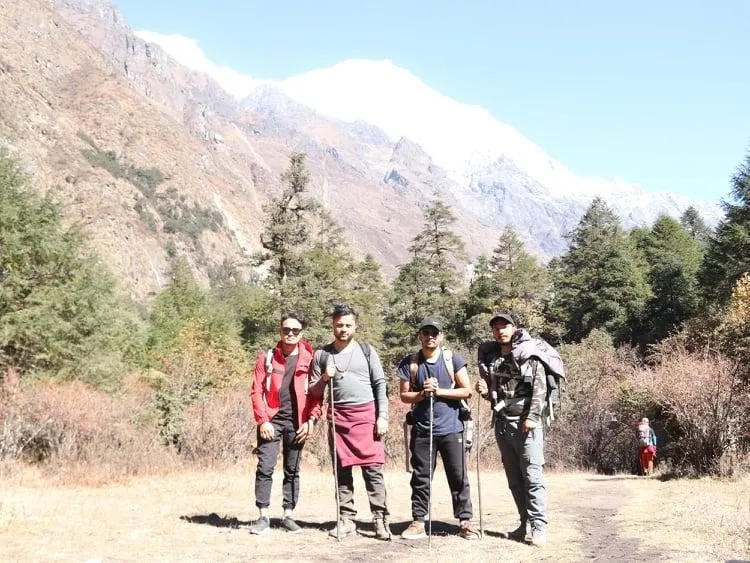
बाँयाबाट साथीहरु क्रमसः दीपक, बिकाश, आदर्श र सुमन(म)
यात्राको पहिलो दिन बिहानै ५ बजे मैतीदेवी आदर्शको घरबाट तय गर्यौं । सँगै बसपार्क जान सजिलो हुन्छ भनेर साथीहरू आदर्श, दीपक, विकास र म सबै आदर्शको घरमा बसेका थियौँ । हिड्नलाइ तयार भएपछि ट्याक्सी बोलायौँ । मैतीदेवीबाट निस्कँदा ५:५० भैसकेको थियो ट्याक्सी ज्ञानेश्वर नपुग्दै पन्चर भयो । बिहानै ग्यारेज खुलेका थिएनन् । ड्राइभरले अर्को ट्याक्सी बोलाएर हामीलाई सजिलो बनाइदिए । माछा पोखरी पुग्दा ६:२५ भैसकेको थियो । काठमाडौँबाट स्याप्रुबेसी जाने पहिलो गाडी छुटिसकेको थियो । केही समय अगाडी गएका साथीहरूले सुमोमा जाँदा छिटै पुगिन्छ भनेका थिए । त्यही अनुसार हामी सुमोको टिकेट काउन्टर गयौँ । ३ ओटा मात्र टिकट बाँकी भएका कारण अन्ततः साढे ७ बजेको बसको टिकट लिएर बस्यौं । बस छुट्नलाइ करिब एक घण्टा बाँकी थियो । त्यो बिचको समयमा चिया नास्ता खाँदै यात्राको योजनाहरु बनायौं ।
टिकेटमा लेखिएको समयभन्दा करिब १५ मिनेट ढिलो गरी बस माछा पोखरीबाट छुट्यो र सँगै छुटे लाङटाङ ट्रेकको योजना सफल हुने नहुने शङ्का उपशङ्काहरू ।
टाउकोको माथि तेर्सिएको सामान राख्ने डिकी हाम्रो ट्रेकिंग ब्यागभन्दा सानो भयो र अन्ततः मन मैलो बनाउँदै ब्यागलाई पछाडी रहेको डिकीको धुलोमाथी राख्यौं । थानकोट काटेर गल्छी हुँदै बस साढे १० बजेतिर नुवाकोटको विदुर पुग्यो । बस रोकियो । सहचालकको ‘खाना खान, दिशा पिसाब गर्न ओर्लनुहोस् है’ आवाजले निदाएका यात्रीहरु पनि बिउझिए । हामी पनि ओर्लेर खाना खान बस्यौँ । सार्बजनिक यातायातमा लामो यात्रा गर्दा बिरलै ठाउँ मिठो खानेकुरा खान पाइन्छ । त्यो बिरलै ठाउँमध्य एक ठाउँ थियो विदुरको त्यो होटल, जहाँ मिठो खाना खाइयो । खाना खाइसके पश्चात हामी बसमा चढ्यौं । बस रसुवा प्रवेश गर्यो । उकालो सुरु भयो अनि मेरो निद्रा ओरालो लाग्यो ।
उकालो सकेर बाटो तेस्रो लाग्यो । बिस्तारै हिमालबाट उडेको चिसो हावाले हामीलाई स्वागत गर्न सुरु गरिरहेको थियो । म निदाएको बबुरोलाई बिउँझाएर भन्दै थियो ‘ए उठ न, हेर त पारि हिमालका टाकुराहरू तलाईनै हेरिरहेका छन् ।’ बसको झ्यालबाट देख्न सकिने सुन्दर पहाड अनि हिमाल हेरिरह्यौँ । साथै हेरिरहे मोबाइलका आँखाहरूले । बाटोबाट पारि देखिने सानातिना झरनाले हामीलाई झन लोभ्याउँदै लगेको थियो । बस आफ्नै रफ्तारमा गुडिरह्यो र उडिरह्यो मन लाङटाङका हिम चुचुराहरूसम्म ।

बसबाट खिचिएको रसुवाको एउटा गाउँ
हेर्दा हेर्दै लाङटाङ राष्ट्रिय निकुञ्ज प्रवेश द्वार पनि आइपुग्यो । सम्पूर्ण यात्रीहरुलाई चेकजाँच गरेर मात्र बस अगाडी बढ्न दिईदो रहेछ । बसबाट ओर्लियौं । धुलोले नचिनिने भएका ब्याग प्यासेजबाट झिकेर चेक गर्नको लागी लाइन बस्यौँ । चेक गरेर सकिएपछि प्रतिव्यक्ति सय रूपैयाको प्रवेश पास लिएर फेरी बसमा पस्यौँ । बसले आफ्नै रफ्तार समायो । रसुवाको सदरमुकाम धुन्चे हुँदै ठिक ३ बजेतिर हामी स्याप्रुबेसी पुग्यौँ । त्यहाँ पुगेसँगै हाम्रो बसको सफर पनि टुङ्गियो ।
संयोगले लाङटाङमा पहिले पनि पुगिसक्नुभएको नवीन दाइ र हामी एउटै बसमा थियौँ । पढ्न र घुम्न पाए सबै पुग्ने उहाँको लाङटाङ यात्रा चौथो पटक रहेछ । उहाँले गर्दा अलिकति भए पनि बाटो र ठाउको बारेमा थप जानकारी र हिड्नलाइ हौसला मिल्यो । स्याप्रुबेसी बाट हिँडेको आधा घण्टामा बाटोकै छेउमा एउटा झरना देखिन्छ । त्यसको नामकरण नवीन दाइले बडो रोचक तरिकाले दिनुभयो । पहिले झरनासँगै सेल्फी खिच्नुभयो अनि भन्नुभयो, अगाडी बाहुबली पछाडि झरना\- बाहुबली झरना । सबै हाँस्दै अगाडी बढ्यौँ । करिब ३ घण्टाको हिँडाई पश्चात् हामी ब्याम्बो पुग्यौँ । पहिलो दिनको थकानलाई त्यहीँ विश्राम दियौँ ।

अघिल्लो दिनको योजना अनुसार हामी बिहान ५:३० बजे नै उठिसकेका थियौँ । हामी उठ्दा बस्ती पुरै सुनसान थियो सिवाय छेवैमा बगिरहेको लाङटाङ खोला । बिहानको नित्यकर्म सकेर हिड्नलाई तयार भएपछी करिब ६:१५ तिर त्यहाँबाट अघि बढ्यौं ।
जति जति पाइलाहरू अगाडी बढे उति उति जङ्गल पछाडि सर्दै गयो । जति जति खोलाको आवाज घट्दै गयो उति उति झरनाको आवाज बढ्दै गयो । कतै खच्चडको टुङ टुङ त कतै आँखा झिम्काउन नपाइ भाग्ने मिर्गहरू । कतै उकालो चढ्दै गरेका यात्रीहरू त कतै ओरालो झर्दै गरेका स्थानीयहरू । उचाइ बढ्दै गयो । बढ्दै गए पहाडमा भर्खरै खस्लानझैँ गरेर टासिएका ढुङ्गाका आकारहरु । जति जति यी कुराहरू आँखाभरि कैद हुँदै गए उति उति लाङटाङ परिवेश फिल हुँदै गयो ।
बाटोमा कार्सेन दाइ भेटिए । घोडा लिएर पाहुना लिनलाई क्याञ्जिङ्ग देखि ब्याम्बो सम्म झर्दै गरेका । अपरिचित तर परिचित व्यवहार । तिब्बेतियन लवजमा नेपाली बोल्ने दाइ रमाइला थिए । एकै छिन रोकिएर कुरा गरेपछि ‘भाइहरूलाई क्याञ्जिङ्गमा मेरै होटेलमा रुम बुक गर्दिसके है मैले ।’ भन्दै तलतिर झरे हामी भने माथितिर उक्लियौँ ।
करिब ३ घण्टाको हिँडाई पश्चात् हामी लामा होटेल पुग्यौँ । त्यहाँ नपुग्दा सम्म एउटै होटेल होला भन्ने हाम्रो सोचलाई उल्टो पारिदियो । वरिपरी जंगल बिचमा सानो तर चिटिक्कको बस्ति । जसको नाम नै लामा होटेल रहेछ । भोक लागिसकेको थियो । बिहानको नास्तामा प्राय बन्ने तिब्बतीयन रोटी र स्थानीय इस्कुसको तरकारी खाएर हिड्यौं ।
बाटो वरिपरि साना\-साना जस्ताले छाएका झुपडीबाट बुढा भएका बा\-आमा हरु ‘बाबु चौरीको छुर्पी, दुध खाएर जानुहोस्‘ भन्दै बोलाउथे । एक ठाउँ पसेर छुर्पी किन्यौँ । फर्कदै गर्दा सुटुक्क ‘बाबु गाँजा पनि लिने हो?’ भन्दै थिए । हामी लिदिनौं बा भन्दै अगाडी बढ्यौं । स्थानीय चौरीको दुध, छुर्पी र घिउ जतिकै गाँजापनि राम्रो ब्यापार हुने हामीले आकलन गर्यौँ ।
साढे १२ बजे तिर घोडा तबेला पुग्यौँ । ३/४ ओटा जति घर । जहाँबाट थान्सेप, लाङटाङ, मिण्डुम, सिण्डुम सम्म देखिन्थ्यो । लाङटाङ रि, लाङटाङ लिरुङ्ग, र सेर्गोरी पिक हिमाल पनि मजाले देख्न सकिन्थ्यो । सम्पूर्ण भ्याली देखिने घोडा तबेला पुग्दा कार्सेन दाई पनि आफ्ना पाहुनालाइ लिएर पुगिसकेका थिए । आफ्ना पाहुनालाई खाना खुवाउँदै गरेका दाइले हामीलाई पनि त्यही खाना खाएर अगाडी बढ्न सल्लाह दिए । खासै भोक नलागेकाले थान्सेप पुगेर खाने योजनाका साथ हामी अगाडी बढ्यौँ ।
देख्दा नजिकै देखिने ठाउँहरू हिँड्दा भने घण्टौँ लागिरहेको थियो । धन्न बाटो सहज भएकाले सजिलै हिँड्न सकिन्थ्यो । हिमालको काखमुनि सुस्ताउँदै, पहाडबाट झरेका पानीका रङ्गहरू हेर्दै, घोडा र खच्चडका पाइलाका डोबहरू मेट्दै, हामी निरन्तर हिडिरह्यौ । हिडीरह्यौ कफीको एक सुर्को र चकलेटको एक टुक्रा चपाउँदै ।

थान्सेपबाट देखिएको लाङ्गटाङ्ग भ्याली
करिब ४५ मिनेटको हिँडाई पश्चात् थान्सेप पुग्यौं । घोडा तबेला जतिकै सानो बस्ति तर सुनसान । सुरुकै होटेलमा गएर झोला र खुट्टा बिसायौँ । कोठाहरु सफा गरिरहेकी होटेलकि दिदीसंग खाना अर्डर गर्यौं । खाना खाइसकेपछि हिमाललाई सिरानी बनाएर एक छिन आराम गर्यौँ । साढे २ बजे पछि हाम्रो यात्रालाई फेरी निरन्तरता दियौँ । आउंदै गर्नु है भाईहरु भन्दै कार्सेन दाई अगाडी लागे । उनलाई पछ्याउँदै हामी हिडिरह्यौ ।
लाङटाङ बस्ती प्रवेश गर्नु पूर्व भयङ्कर अनि उजाडिएको गिर्खा चट्टान र बालुवा टेक्दै जाँदा मन भारी भयो । २०७२ सालमा आएको भूकम्पले गर्दा बस्तीमाथिको हिमालमा ल्याण्डस्लाइड भएर पुरै बस्ती नै बगाएको रहेछ । त्यसको असरले त्यहाँ भएका सयौं जिन्दगी एक चिहान भएका रहेछन् । एकै छिन सुस्ताएर सबै दृश्य नियाल्यौँ मन कटक्क पार्दै अगाडी बढ्यौँ ।
लाङटाङ पुग्यौँ । ढुङ्गा छापिएको बाटोको दुई छेउमा रङ्गीचङ्गी होटेल, झुप्प बस्ती । बेकरी आइटम बास्ना आउने गल्ली, जसले अडिएर लामो सास तान्न बाध्य बनाउने । अहिले नै हिडलान् झैँ गरेर उभिएका ट्रेकिङ पसल हरू । चिटिक्क परेका क्याफेमा रङ्गिन अक्षरहरू । हस्तकलाको सामान फुलेको बरन्डा । ‘आऊ, आज यतै बस’ भनेजस्तो लाग्ने घर अगाडी उभिएका क्याफेको कुर्सीहरू । नजिकै खोला बगिरहेको । आँखाले देख्न सक्ने जति वरिपरी हिमालमा हिउँको थुप्रो । हिउँ पग्लिएर देखिएका काला ढुङ्गामाथिबाट हिउँकै रङ्ग बगिरहेको । जसले झन् सुन्दरता पैदा गरेको थियो । यस्तो लागिरहेको थियो कि म कुनै अर्कै दुनियाँमा प्रवेश गरिरहेको छु । एक दिन सम्म हिँड्दा फोन चार्ज गर्न नपाएका हामीले त्यहाँ बिजुलीका तारहरू देखिरहेका थियौ । फोन सम्पर्क गर्नलाई नेटवर्क नभेटेका हामीले फोर जी नेटवर्क पाएका थियौँ ।
सिण्डुम प्रवेश गर्न बित्तिकै घाम अस्तायो । हिमालहरु सेता बाट पहेंलो भए । यस्तो लाग्यो केही कुरा त रहेछ जसले रङ्ग फेर्दा झन् सुन्दर देखिने रहेछ ।

५ बजिसकेको थियो । थकान भने खुट्टा हुँदै शरीरसम्म पुगिसकेको थियो । कतिखेर क्याञ्जिङ्ग पुगिएला र आनन्दको श्वास फेर्न पाइएला भन्ने आशा मनभरि नजागेको हैन । विकासको पहिलो ट्रेक थियो त्यसैले पनि होला अनुहारमा अलिकति डर देखिरहेको थियो । खोलाको सङ्गीत र जुनको उज्यालोले हामीलाई हिँड्न मद्दत गर्यो । ७ बजेतिर हुनुपर्छ केही दुरी पर बत्तीको उज्यालो देखियो । मन अलिकति चंग भयो । तर त्यो उज्यालो जति हिँड्यो उति पर पर देखिन्थ्यो । यस्तो लागिरहेको थियो कि उडिरहेको जुनकिरीलाई समाउन दौडिरहेका छौँ । अन्ततः जुनकिरीलाई छुनै आटेका थियौँ कार्सेंन दाइ र भाउजू लाइट बोकेर हामीलाई नै खोज्न आइरहेका भेटिए । अधेरो बाटोमा हामी सबैको अनुहार उज्यालियो । दाई भाउजूको पछि लागेर होटेल पुग्यौँ । कार्सेन दाइले कोठा देखाइदिए । हामी गएर झोला बिसायौँ । चिसो एकदमै धेरै थियो त्यसैले फ्रेस भएर आगो ताप्न बस्यौँ । हामी बाहेक एक जोडी बिदेसी मात्र पाहुना रहेछन त्यो दिन । उनीहरु पनि आगो ताप्दै उनो खेलिरहेका थिए ।
खाना तयार भएको जानकारी भाउजूले भान्साबाट दिईन । भोक लागिसकेको थियो त्यसैले हामी खानलाई तयार भयौँ । खाना खाइसके पछि दाई भाउजूसंग एकछिन कुराकानी भयो । छोरा छोरीलाई काठमाडौँमा पढाईरहेका आफुहरु दुईजना मात्र क्याञ्जिङ्गमा होटल संचालन गरेर बसेका रहेछन । अर्को वर्षसम्म ढलान वाला घर बनाउने योजना बुनेका कार्सेन दाइ भन्दै थिए ‘क्याञ्जिङ्ग पनि अब सहर भैसक्यो भाई ।’ हुन पनि क्यान्जिङमा गुजमुज्ज परेका ठूला\-ठूला कंक्रिटका घरहरूले ढाकिएको छ, बाटो पनि सहरको भित्री गल्लीमा जस्तो सानो न सानो । समुन्द्री सतहबाट करिब चार हजार मिटर उचाइमा रहेको सधैंजसो चिसो मौसम हुने क्यान्जिङमा ढलान घर बनाउन प्रयोग हुने सामान काठमाडौँबाट हेलिकप्टरमा लगिने रहेछ, जसमा प्रयोग हुने सिमेन्टको मूल्य बोराको ५ हजारसम्म पर्ने दाईले बताए । उनले थप्दै गए ‘यहाँ एउटा घर बनाए बराबर काठमाडौँमा ३ वटा घर बनाउन सकिन्छ । सामान ढुवानी खर्च मात्र १ करोड माथि पर्छ ।’ कुरा गर्दा गर्दै हाम्रो थकानलाइ बुझेर होला सायद, भाईहरु आराम गर्नुहोस् भन्दै उनीहरु सुत्न गए । हामीपनि सुत्यौँ ।
कार्सेन दाइँसँग को सल्लाह अनुसार हामी बिहानै ५ बजे छेर्गोरी पिकको लागि निस्कने गरी उठ्यौँ तर निस्कँदा ६ बजिसकेको थियो । अँधेरो लगभग हटिसकेको थियो । सेता हिमालको प्रतिबिम्वले अँधेरो हुन दिएको थिएन । केहि समय हिडेपछी एउटा खोला आउँछ । त्यसलाई पार गर्दै हामी उकालो लाग्यौँ । अलिकति माथि पुगेका के थियौँ, सूर्योदय भयो । हिमालको शिरमा घामको पहिलो झुल्को परेको देख्दा एक पटक त आफ्नै शिर पनि त्यहिसम्म पुर्याइदिउकि झैँ लाग्यो । त्यति सुन्दर दृश्य देख्दा हामी सबै खुसीले करायौँ । माथि हिमाल तल क्याञ्जिङ्ग बस्ती अलि तल खोला बगेको । आहा! त्यो दृश्य, क्या मनमोहक थियो, म शब्दमा उतार्न सक्दिनँ । क्यामेरा निकालेर त्यो सुन्दरतालाई फ्रेमभित्र कैद गरेँ । र हामी पुग्ने शिर हेर्दै फेरी उकालो लाग्यौँ ।

लाङटाङ घुम्न जाने मान्छेहरू मध्ये उकालो हिँड्न सक्ने र अग्लो ठाउँमा पुग्दा बिरामी नहुने सीमित मान्छेहरू मात्र छेर्गोरी पिक पुग्ने रहेछन् । बाँकी प्राय क्यान्जिंग रे, अनि क्याञ्जिङ्ग भ्याली वरिपरि घुमेर फर्कने रहेछन् । सजिलो र छोटो दुरीमा भएकाले प्रायको गन्तव्य क्यान्जिंग रे नै हुँदो रहेछ । तर हाम्रो गन्तव्य भने धेरै लामो थियो र सुन्दर पनि ।
साना साना बुट्यानले भरिएको र गिर्खा चट्टानले बनेका नाङ्गा बन्जर पहाडहरू उक्लँदै गयौँ । हिउँ सुकेका खैरा पहाडहरूलाई हिउँ भरिएको हिमालले गिज्याएजस्तो देखिन्थ्यो । माटो जम्मै बगेर ढुङ्गा अनि गिर्खा चट्टानहरूको लेपन ती पहाडहरूमा थियो ।
पारि पारि सम्म चौँरी गाइहरू चरिरहेका हुन्थे । घाम डुल्दै तल क्याञ्जिङ्ग सम्म पुगिसकेको थियो । उचाइ बढेसङै हावाको गति पनि बढिरहेको थियो । पानी पिउँदै, ब्यागमा राखेको खानेकुरा खाँदै पाइलाहरू अगाडी बढाई रह्यौँ । त्यो उकालोमा ब्याग पनि भारी लागिरहेको थिएन सायद केही कुरा पाउने साहस पछिको विश्वासमा, ढुङ्गा पनि कपास जस्तै हलुका भइदिने रहेछ ।

करिब साढे ४ घण्टा हिँडिसकेपछि खुट्टाले हिउँमा टेक्न पाए । लट्ठीको सहायताले त्यो हिउँको बाटोबाट सेर्गोरीको टुप्पोमा पुग्न आधा घण्टा भन्दा बढी लाग्यो । जति माथि उक्लिँदै गयौँ उति हावाको गति पनि उक्लिरहेको थियो । तर चारैतिर देखिने हिमालहरूले सबै कुरालाई भुलाइदियो । यतिसम्म कि ५ घण्टाको ठाडो उकालो हिँडेको थकान पनि ५ सेकेण्ड मै हरायो । समुद्री सतहदेखि ५ हजार मिटर अग्लो ठाउँमा अवस्थित छेर्गोरी पिक साँच्चिकै अलौकिक सुन्दरताले भरिएको थियो । त्यहाँबाट नजिकै याला पिक, लाङटाङ रि, लाङटाङ लिरुङ्ग, नयाँ खंज, लाङ्गशिशा रि पिक, लगाएत समुद्री सतहदेखि ७ हजार ३ सय मिटर उचाईसम्मका हिमशृंखलाहरु वरिपरि थिए ।
आकाश सफा थियो । रापिलो घाम लागेको थियो जसले गर्दा हामीलाई सोचे जति चिसो हुनबाट जोगाइरहेको थियो । हावामा उभिँदै उड्दै गर्ने हिमाली कागहरू । हावाको गतिमा लहराइरहेका दर्चोग र लाङ्ग्टाहरु । ति सबै हेर्न लायक थिए । हामी पुगेको केही समय पश्चात् एक हुल विदेशीहरु पनि सोही ठाउँ पुगे । २० मिनेट जति बसेर फोटो भिडियो खिची उनीहरू फर्किए । हामी भने यतिकै त्यो ठाउँ छोडेर फर्कन मन गरेनौँ ।
समुद्री सतह देखि ५ हजार मिटरको उचाइ हामी सबैको पहिलो नै थियो । त्यसैले पनि होला आदर्श र विकासलाई केही गाह्रो भएको सङ्केत पश्चात् उनीहरू फर्किए । म र दीपक केही समय त्यतै अलमलियौँ । फोटो र भिडियो खिच्यौँ । २ बजिसकेको थियो, खानेकुरा र पानी रित्तिसकेको थियो । आधा घण्टापछि हामी ओरालो झर्यौं । ५ घण्टा लगाएर चढेको उकालो, हामीलाई ओरालो झर्न करिब २ घण्टा लाग्यो । बेलुका साढे ४ बजे तिर होटेल पुग्यौँ । दीपक र म पुग्नुभन्दा अलिकति अगाडी आदर्श र विकास पुगेर आराम गरिरहेका थिए । हामी पुगेपछि सँगै खाना खायौँ । साँझ परिसकेको थियो । त्यसैले त्यो रात पनि हामीले क्याञ्जिङ्गमै बिताउने निधो गर्यौं ।
आगो ताप्दै कार्सेन दाई भाउजूसंग रमाइलो गफ गर्दै त्यो साँझ बितायौँ । स्थानीय खानेकुरा र तरकारीहरुमा केहि ठाउँमा टनेल लगाएर साग उत्पादन गर्ने र मौसम अनुसारको इस्कुसबाहेक अन्य कुराहरुको उत्पादन खासै नहुने रहेछ । आफ्नो नापीवाला जमीनमा खासै केहि उत्पादन नहुने र निकुञ्जको जमीन प्रयोग गर्दा उम्रन नपाई जोतेर नास गरिदिने गरेको गुनासो कार्सेन दाइ पोख्दै थिए । सुख दु:खका लामो कुराकानी भयो । अबेर भैसकेको थियो । हामी बिहानै निस्कने जानकारी गरायौँ । दाईले २ रात सुतेको पैसा लिएनन् । आफ्नो नजिकको मान्छे सरह स्नेह दिन भने कत्ति कमि गरेनन् चाहे त्यो बिना सम्पर्क अधेरोमा लाइट बोकेर हामीलाई खोज्न जाँदा होस् या खाना र बस्नमा होस् ।

कार्सेन दाईसंग उनकै होटेलमा
भोलिपल्ट बिहानै घामभन्दा पहिले नै उठेर हामीले फेरी भेट्ने बाचाका साथ क्याञ्जिङ्ग गोम्पालाइ बिदाइका हातहरू हल्लायौँ । घोडा तबेला पुग्दा बल्ल हामीलाई घामले भेटायो । एकै छिन घामसँग सुस्ताएर हामी सङ\-संगै ओरालो झर्यौं । अनि उकालो चढ्ने यात्रीहरू भेटिन थाले र सँगै ‘नमस्ते’ र ‘अझै कति लाग्छ?’ भनेर सोध्ने प्रश्नहरू बढ्दै गए । म सँग यो प्रश्नको एउटै जवाफ हुन्थ्यो ‘गन्तव्यलाइ हेरेर हैन यात्रालाई महसुस गरेर हिड्नुहोस्, तपाईले खोज्नुभएको ठाउँ तपाइकै आँखा वरिपरि छ ।’
**भिडियोमा हेर्नुहोस्**
---
# 10 Free Social Media Marketing Course to Elevate Your Skills
> Ten free social media marketing courses from Coursera, HubSpot, Skillshare and more, covering strategy, analytics and ethics to help you grow a brand.
By Suman Khadka · Published 2021-05-15 · Topics: Engineering · Source: https://sumankhadka.net/10-free-social-media-marketing-course-to-elevate-your-skills/
Did you know that more than half of the world i.e. 4\.57 billion people use social media platforms? Yes, you heard right. The increasing number of users on social media platforms is the reason that so many brands and digital marketers are taking benefits from social media. They build brand awareness, generate leads, and more.
If you have not taken advantage of this opportunity, then it is the right time to get started. The beauty of social media marketing is that if you do the right way to promote your business then you will get benefits in a short period of time.
Where can you go for the best and free social media marketing course that has the most useful marketing information? I have had to research a huge amount of resources and here I’m excited to share with you the top 10 free social media marketing courses to elevate your skills across the board.
##### So let’s dive into free social media marketing courses!
## \#1 [What is Social?](https://www.coursera.org/learn/what-is-social)
What is Social? This is a very impressive and free social media marketing course offered by Coursera. This course is designed by Northwestern University. The instructor for this course is Randy Hlavac, who is also the CEO of Marketing Synergy, Inc.
Here are the things that you will learn from this course:
- Introduction to Social Marketing
- Social Trends
- The Business of Social
- Social Overview
- Data Analysis
This course is a mixing video, content materials, assignments, quizzes, etc. After the completion, of the course, you will get the certificate.
## \#2 [Social Media](https://academy.hubspot.com/courses/social-media)
The Social Media course is offered by HubSpot. This is a certification course that will help you to build a social strategy and your social presence.
Here are the things that you will learn from this course:
- Develop a social media marketing strategy
- Social media monitoring
- Social content strategy
- Social media reach
- How to advertise on social media
- Social media marketing ROI
- Essentials of social media
The social media course or overall all in one course. It is 4 hours and 40 minutes course.
## \#3 [Introduction to Social Media Strategy](https://www.skillshare.com/classes/Introduction-to-Social-Media-Strategy-Learn-with-Buffer/1934895986)
The Introduction to Social Media Strategy course offered by Buffer. Especially it is designed to help you to learn how to form an effective social media strategy.
This is completely beginners level and free social media marketing course.
Here are the things that you will learn from this course:
- Finding a unique voice on social media
- Selecting the right platforms for you
- Creating and curating engaging content on social media
- How you can use the right tools
- A 5\-step Facebook advertising strategy
This is only 43 minutes of course but you can take as long as you can deeply understand social media strategy.
## \#4 S[ocial Media Analytics](http://academy.quintly.com/courses/free-social-media-analytics)
The Social Media Analytics course is a beginner level of free social media marketing course that gives you the basics of knowledge on social media analytics.
Here are the things that you will learn from this course:
- Situation analysis
- Competitor benchmarking
- Collecting data from different social media platforms
- Identifying KPIs to measure your goals
- Understanding analytics reports and metrics
- Deciding on the audience for different types of reports
- Automating reports
In this course, you will get the video, reading materials and quizzes.
## \#5 [Social Media Quickstarter](https://blogs.constantcontact.com/social-media-quickstarter/#)
The Social Media Quickstarter course especially for beginners who just start to use social media. This course offers a step by step guide to building a presence on social media platforms. This is a free social media marketing course that has great resources for those who are looking to dive into the social world.
This course is offered and created by Constant Contact.
## \#6 [Social Media Marketing Certification](https://www.emarketinginstitute.org/free-courses/social-media-marketing-certification-course/)
The Social Media Marketing Certification course is a different type of course on this list. This course does not have any video material to learn. This is only a text\-based course. It has 165 pages that detail the major aspects of social media marketing.
Here are the things that you will learn from this course:
- Basics of social media marketing
- Different types of social media platforms
- How to identify your target audience
- How to engage with your target audience
- Sharing content on social media platforms
- To build a social media strategy
- Dos and don’ts of social media marketing
This is a completely text\-based free social media marketing course. Once you finish reading the material of this course, you can take an exam. If you pass the exam then you will get a certification.
## \#[7 The Business of Social](https://www.coursera.org/learn/business-of-social#about)
The Business of Social is another informative and free social media marketing course offered by Northwestern University. It provides a certificate after the end of the course as well. If you want to track your social media performance and link it to sales then this course might be very useful for you.
Here are the things that you will learn from this course:
- Legal considerations for social media strategy
- Using different social media for business growth
- Creating a performance funnel
- Designing a program and justifying its viability
This course takes five hours to complete. But you can go deep into this course to complete it in one month.
## \#8 [Social Media Ethics](https://www.udemy.com/course/social-media-ethics/)
The Social Media Ethics course is offered by Coursera. It will help the framework for social media networking. Engaging in an ethical way conversations for all the professionals and employees as well.
Here are the things that you will learn from this course:
- Exercise good judgment while using social media networks for work
- Avoid tweeting something that could get you fired
- Understand the constitutes ethical behavior on social media
- Demonstrating consideration for others on social media
In this course, you get the 33 minutes of video content for free.
## \#9 [International B2B Marketing Course](https://www.coursera.org/learn/b2b-marketing)
If you are interested in an international B2B marketing course and learning how to use it right? Then try this course. This course offers you the B2B basics to explain how you can boost the business as well.
This course is created by Yonsei University and it will take up to 3 weeks to complete the course if you only learn 2 hours of the week.
## \#10 [Social Media Monitoring](https://www.udemy.com/course/social-media-monitoring-for-business/)
This is another free social media marketing course to elevate your skills on social media. This course is offered by Udemy and created by Eric Schwartzman.
Here are the things that you will learn from this course:
- Keyword phrase filtering technique
- Finding the right keywords
- Finding influencers
- Curating content
- Text analysis
- Social media strategy for different platforms.
In this course, you will get the mix of video and textual reading content materials. the 7 hours and 26 minutes long course helps you to monitor social media.
## \#Conclusion
There are numerous social media marketing courses available on the internet for free and paid as well. But to find the best course is really hard. So these are some of the best free social media marketing courses that you can enroll in to elevate your skills.
I have missed some of the best courses at the free of cost, please let me know by commenting below. I will add the best courses that I receive from you.
---
# Clockify – A Time Tracking Application for Teams
> A review of Clockify, a free time tracking app for teams: its web, desktop and mobile apps, main features, user reviews and who it suits best.
By Suman Khadka · Published 2021-05-15 · Topics: Tools & Workflows · Source: https://sumankhadka.net/clockify-a-time-tracking-application-for-teams/
Time tracking software is an essential time management tool that can help you to become more organized in the management and business sector. It enables employees to track their time spent on specific projects and tasks.
There are hundreds of time tracking software available on the internet. They also have countless features as well. However, The Clockify – A time tracking application for teams offers more features in free of cost. So in this blog, I am going to talk about Clockify, reviews, and its features.
So let’s dive into a [Clockify](https://clockify.me/)
## What is Clockify?
Clockify is the time tracking application for a team that allows them to track their working schedule and hours for the projects. It is a completely free time tracking tool for consultants, freelancers, businesses, remote workers, universities, NGOs, and enterprises.
Clockify dashboard
It has lots of features that can help consultants, freelancers, businesses, remote workers, universities, NGOs, and enterprises with time tracking, project management, task reporting, team management, task division, etc. It allows them to track reminders, delete time entries, generate daily and weekly reports with details. Users can also manage the specific tasks, estimate the time and cost, etc.
## Company Overview
**Name:** Clockify
**Industry:** Software, Productivity Tools, Project Management
**Company Type**: Non Profit
**Revenue:** Around US$2\.3 Million \[2019]
**Founded:** March 1, 2017
**Founder:** Nenad Milanovic
**CEO:** Nenad Milanovic
**Headquarter:** San Francisco, California, United States
**Area Served:** Worldwide
**Parent Organization:** COING Inc
## Web and Desktop App
Clockify primary focus on the [web app](https://clockify.me/). In this version, you can review and export reports, manage projects, invite people, and review timesheets.
It is also available on the desktop version with the same features. You can simply download from [this link](https://clockify.me/apps) and login with your credentials and track time even while offline.
Clockify is also available on [Google Chrome](https://clockify.me/chrome-time-tracking) and [Firefox](https://clockify.me/firefox-time-tracking) Browser Extension. You can download and track time from your computer.
## Mobile Apps
Clockify is available on both [iOS](https://clockify.me/iphone-time-tracking) and [Android](https://clockify.me/android-time-tracking) app stores. You can download and track time from your smartphone.
## Clockify Features
Clockify has a lot of features available with free and premium versions. Here are the top features of Clockify.
clockify time tracker
- **Time Tracker**: Before clocking in for work, you have an option to start and stop timers. So you can start timers and start working as well. Once you finish your tasks you can stop the timer and it will calculate your time and cost.
- **Timesheet**: You can also log your daily, weekly, and monthly time in less than a minute. You can divide the specific tasks with hours day or week.
- **Dashboard:** The dashboard of Clockify allows you to see all tasks, projects, total time, the amount in the chart, or graph format.
- **Reports**: In this feature, there are three types of reports made available to you. Summary, Detailed, and Weekly. If you want to see the all report summary, then it will break down the project’s progress and generate a summary. You can view the project reports in detail and weekly as well.
- **Projects**: This feature will help you to track time on projects and keep an eye on the progress and budget of the project.
- **Team**: Collaboration is crucial in every project or any organization. So in this feature, you can invite your team to a specific project, so they can record their attendance and track how much time they spend on the tasks. And they can set the hourly rating themself. Team features also assign the role of tasks.
- **Extras**: Clockify offers more features like cost and profit, reminders, lock timesheets, approval, rounding, alerts, and many more.
- **Custom Fields:** In this feature, you can add additional fields to time entries and track anything like expense, mileage, status, quantity, units, IDs, location, and many more.
It also has a more feature like, Billing and Invoicing, Automatic Time Capture, Multiple Billing Rates, Timesheet Management, Leave Tracking, Billable and Non\-billable Hours, Offline Time Tracking, Employee Database, Mobile Time Tracking, Overtime Calculation, etc. You can also visit [here](https://clockify.me/feature-list) for more features.
## Clockify Reviews
Clockify is a cloud\-based free time tracking application for all types of businesses, consultants, freelancers, etc. It has also a plus, premium, and enterprise version available with extra features.
Clockify Reviews on Getapp.com
Every app or anything has pros and cons so in this software as well. So most of the users rating 5 and in aggregate, 4\.7 out of 5 in different review platforms, and 99% of users recommended this software.
## Who and Why use Clockify?
All the consultants, freelancers, businesses, remote workers, universities, NGOs, and enterprises where employees spend a lot of time working on a computer or working from home should use to benefits from time tracking.
Here are some reasons you should use Clockify
- Get an accurate look at your workweek
- Improve project profitability
- Show clients how much you’ve worked
- See what team works on
- And many more!
## Useful Links
**Website:**
**Parent company website:**
**Privacy policy:**
**Download Link:**
**Twitter**:
**LinkedIn:**
**Facebook:**
**Instagram:**
## Final Thoughts
If you’re a consultant, freelancer, business owner, remote worker, universities, NGOs, and enterprise person, then I highly recommend this software for time tracking, project management, and team management. It will help you to record time, boost productivity, and create better estimates for future project planning, etc.
I hope this article helped you to better understand about Clockify, if you have any queries regarding this topic, please let me know in the comments.
---
# Last night, I had a Dream!
> A short, personal piece about a dream of someone I once loved: the walks we took, the promises we made, and learning to let the memory go.
By Suman Khadka · Published 2019-03-13 · Updated 2026-05-23 · Topics: Random thoughts · Source: https://sumankhadka.net/last-night-i-had-a-dream/
Listen to Audio
I had a dream about you last night. You and I together only to be separated again. Sometimes I think of all those days spent with you in happy times. I was once \& still am in love with you, I would be lying if I said I don’t think of us ever. All those walks we took, all those promises we made, the dreams shared, I remember them all. Do you? I hope yes, you do as well, I hope you are happy. I hope no corner of your heart is in pain and every thought of the memory is lost in time. I will live with it, but I won’t live knowing you too are in pain of what could never come true.
Every
time I close my eyes, you are there. So do not worry about me, I’m
not alone, I have you. I can’t explain you why I still love you,
but I will always do. Sure, i will never tell you or anyone else, but
silence wouldn’t make it any less true.
I
dreamed of us together, you and I happy and in love. How is it even
possible to not think of you? Even when I know its just a dream, i
try to live it as long as possible because its the only place where i
find you telling me you love me as we walk hand in hand, like we used
to do.
I
had a dream about you last night…you and i were happy again, you
were by my side again. We were in love \& we were happy, surely i
knew it was a dream it had to be. Even in a dream the truth stings
and screams at me there is no more us, no more we. But I had a dream
about you; you said ‘I love you’ more than once \& twice.
Everything felt like it was, happy \& nice, I was back where we
lived, the life we built and a future we dreamed about. Didn’t we
know that we were dreaming a dream that would never come true? We
did. We always knew, yet we loved each other.We were in love and we were together.
Sometimes
I wonder if I could go back, would I do things differently knowing it
would always come to this. You and I away, apart and not meant to be
together. I know I wouldn’t, I wouldn’t change a second of
everyday with you.
I
was and I’m in love with you, only you don’t know and will never
know. Last night I had a dream I have had before, a dream of us
walking by and meeting again, only to smile and walk away. How many
times has that happened? I wonder if you try to read my mind when I
tell you everything is great.
I
hope you are unaware of the pain, I hope you have forgotten the life
we lived; I hope you are being loved more than I loved you. I can
live the pain but I know it’s too much for you, I hope you live in
a world where there is no wind from memories. It would kill me to
know you love me too, because I know how much it hurts every day. How
will I live knowing you are in pain too?
Last
night I had a dream about you and me, lying together, looking up, and
talking of things we liked. We were happy, in love and young again.
Every dream I have of you is a time machine, I hope I never stop
dreaming. It hurts, but it also takes me back to life we had. We were
in love and happy.
Last
night, I had a dream about you and me….!!!!